
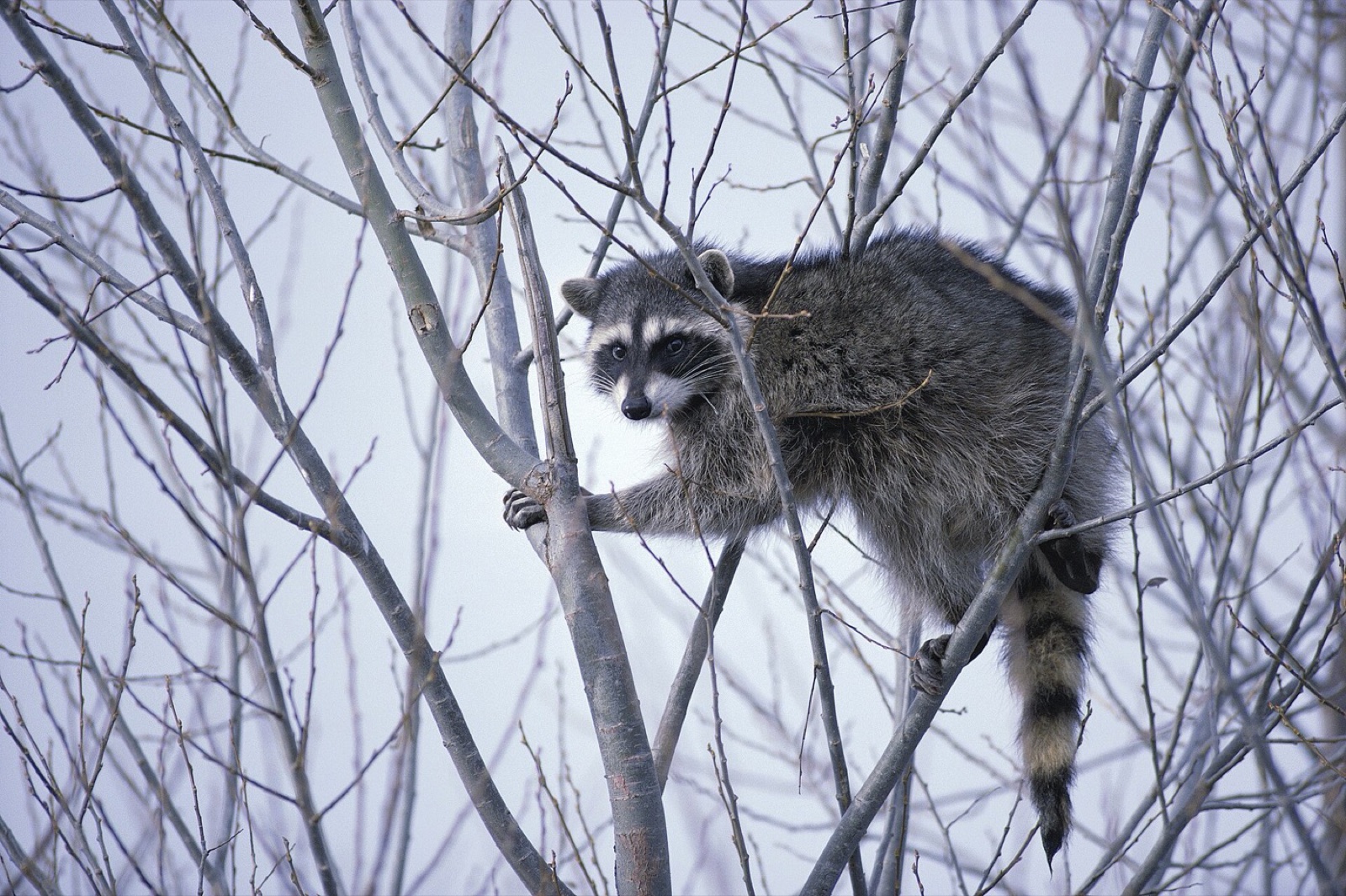
Photo David Menke (opens in a new tab), Public domain (opens in a new tab)
Normal explanations
A mother feeding young may forage whenever food is available. An animal may have been displaced from a resting site, or simply be following a locally useful routine. A raccoon walking normally, avoiding people and moving purposefully is very different from an animal that cannot coordinate its body.
Illness can look similar from a distance
Rabies can cause neurologic changes, but canine distemper can also cause disorientation, weakness, tremors, respiratory signs and abnormal behavior in raccoons. Trauma and toxins can add still more possibilities. Public-health guidance emphasizes that rabies risk decisions should be based on exposure and professional assessment, not casual visual diagnosis.
If there was contact, the rules change
A bite, scratch or saliva contact with eyes, mouth or broken skin needs a doctor, and it should not wait. Do not handle a suspect animal yourself. If the animal can be confined safely without anyone touching it, say so when you call — whether it can be tested changes what happens next.
What to do
- Keep distance and bring pets indoors.
- Record video from a safe location if the behavior is concerning.
- Do not try to hand-capture a sick raccoon.
- Contact a licensed wildlife rehabilitator for illness assessment. If any person was exposed, that is a matter for a doctor and it should not wait.
- Keep pet vaccinations current.
> Safety note: Any bite, scratch, or plausible rabies exposure should be discussed promptly with a healthcare professional or local public-health authority.
Daylight is a clue, not a diagnosis. Replacing a scary rule of thumb with careful observation protects people and reduces needless harm to healthy raccoons.