
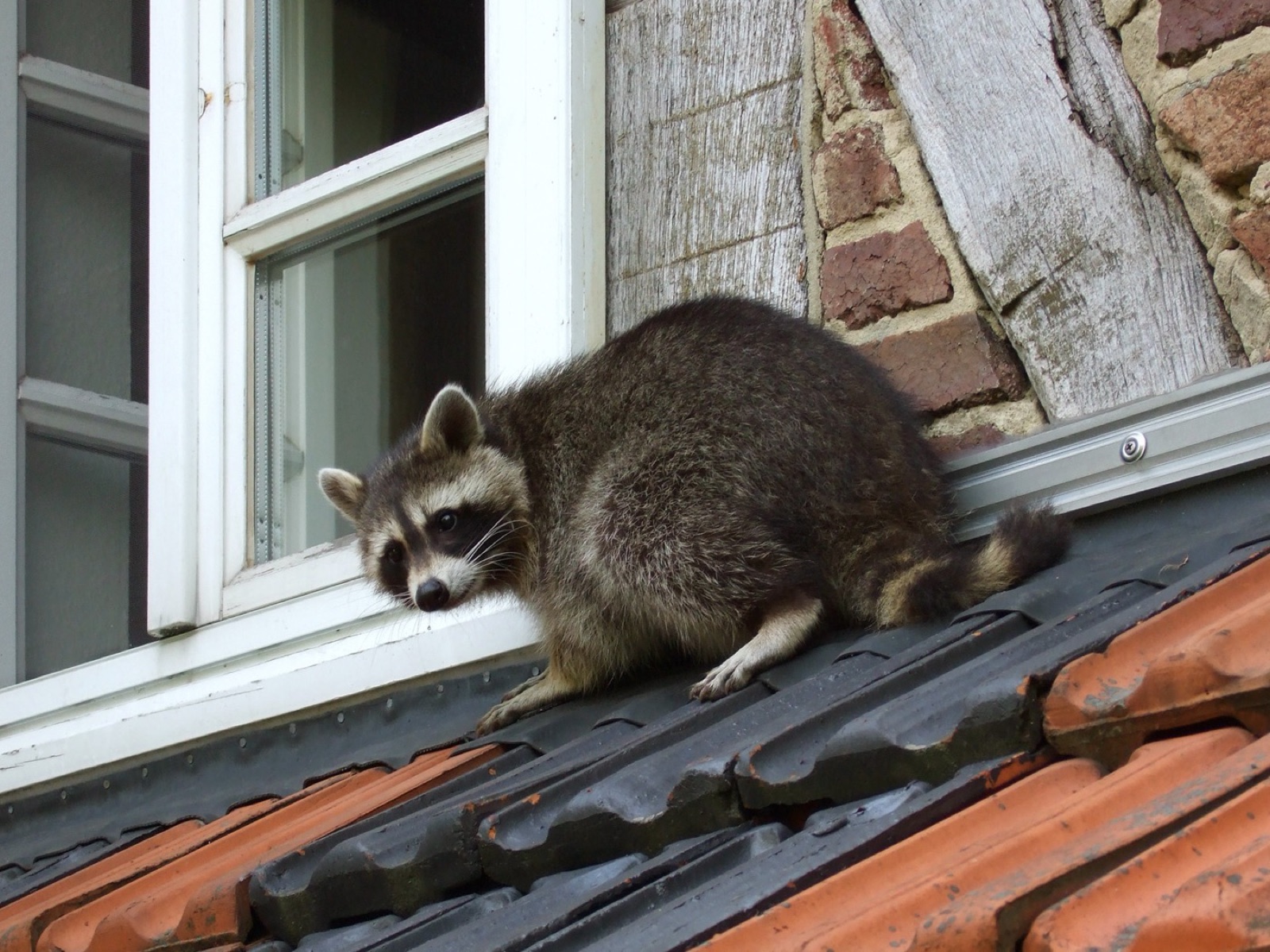
Photo Carsten Volkwein (opens in a new tab), CC BY-SA 2.5 (opens in a new tab)
Why trapping is the wrong answer
Trapping separates the mom from her young, creating an even bigger problem by making the kits orphans. Trapping should NEVER be done. It is always the wrong approach.
The right approach is to have the raccoon mom voluntarily relocate her family elsewhere
She chose that attic to raise her babies because it's safely above and removed from predators, not exposed to weather, warm, and quiet - the perfect place to raise a family.
To get her to pick up and move house with her babies, you must make the attic an place that feels dangerous and threatening to mom. Like a scary movie, there needs to be a gradual buildup that increases the discomfort steadily so that she never flees in terror, leaving her babies behind, but instead gets her more and more nervous and uncomfortable - until she decides to take her babies and leave.
Manipulate her perceptions by manipulating her senses
Like humans, raccoons experience the world through their senses - sights, sounds, smells, etc., To make mom feel gradually more threatened, introduce unpleasant experiences.
Bright flashing lights in the attic are sights that give her pause.
An electronic device playing music or human voices are foreign and scary.
One tactic that's especially effective is to place small containers around the attic with a little coyote urine (opens in a new tab) in each container. It will give the attic the slight scent of a baby-eating predator which will keep mom nervous, without being strong enough for the humans in the house below to smell it.
By introducing multiple approaches, it builds a sense of discomfort for mom that will prompt her to move her family out of the attic voluntarily. This keeps the family together and alive, without inadvertently making the situation worse.
She will do this in multiple consecutive steps over several days:
First she will go out by herself and find a good place to build a nest.
Then she will build the new nest.
Once it's ready, she will return to the attic to retrieve the first baby, and carry it in her mouth to the new nest. This is very hard for her to do, and it may take her all night.
She will keep returning to the nest each night to retrieve another kit and move it, so it's important to give her the time she needs to move the entire family - night by night.
Use cameras on the nest (if it's location in the attic is known) and the attic ingress / egress point to verify her activities and know when she's no longer coming back.
Once she's gone, attempt to verify that no kits have been left behind.
Once she is done relocating her family, seal the ingress /egress point
The durable solution is exclusion: identify the entry point and repair the vulnerability. If the roof, soffit or vent remains accessible, removing one raccoon simply leaves a vacancy for another animal.
Professional Wildlife Removers who follow this protocol instead of trapping
- Brandon Sanders of Sanders Wildlife Inc. | Georgia | (770) 833 6785
Decision point
Is this happening right now?
Answer a few questions and you will get an answer for the animal in front of you, filtered to rehabilitators who may lawfully take it.
Start the guidance flow