
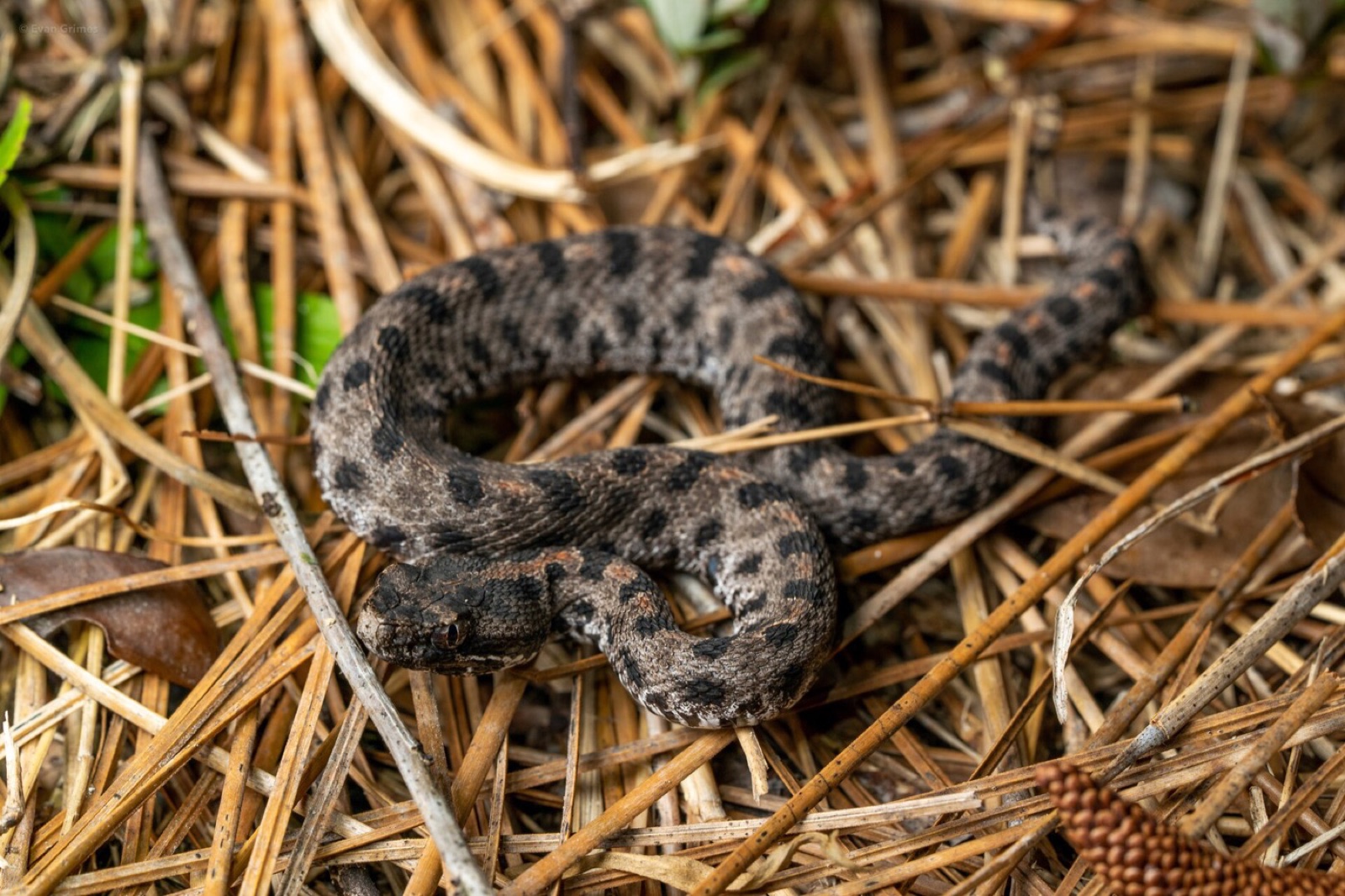
Photo evangrimes (opens in a new tab), CC BY 4.0 (opens in a new tab)
What they look like
Pygmy rattlesnakes are stout for their length, often grayish with a row of dark dorsal spots and sometimes a reddish or orange stripe. Juveniles have a bright tail tip used as a prey lure.
Defensive behavior is not a personality flaw
They are sometimes described as “feisty,” but a small snake on the ground has good reason to react to a giant approaching animal. Wildlife agencies note that they often rely on camouflage and may be slower to strike than the reputation suggests.
Where caution matters
Because of their size and camouflage, bites can occur when a hand or foot gets too close without seeing the snake. Closed-toe footwear and a flashlight reduce that risk.
What to do
- Use a flashlight around steps, woodpiles and vegetation at night.
- Keep hands out of blind spaces.
- Do not assume a small snake is harmless because it is small.
- Give the snake a clear retreat.
- Seek professional removal only when its location creates an unavoidable conflict.
Pygmy rattlesnakes deserve the same balanced message as every venomous snake: take bites seriously, prevent close contact, and resist the idea that a defensive animal must be destroyed.