
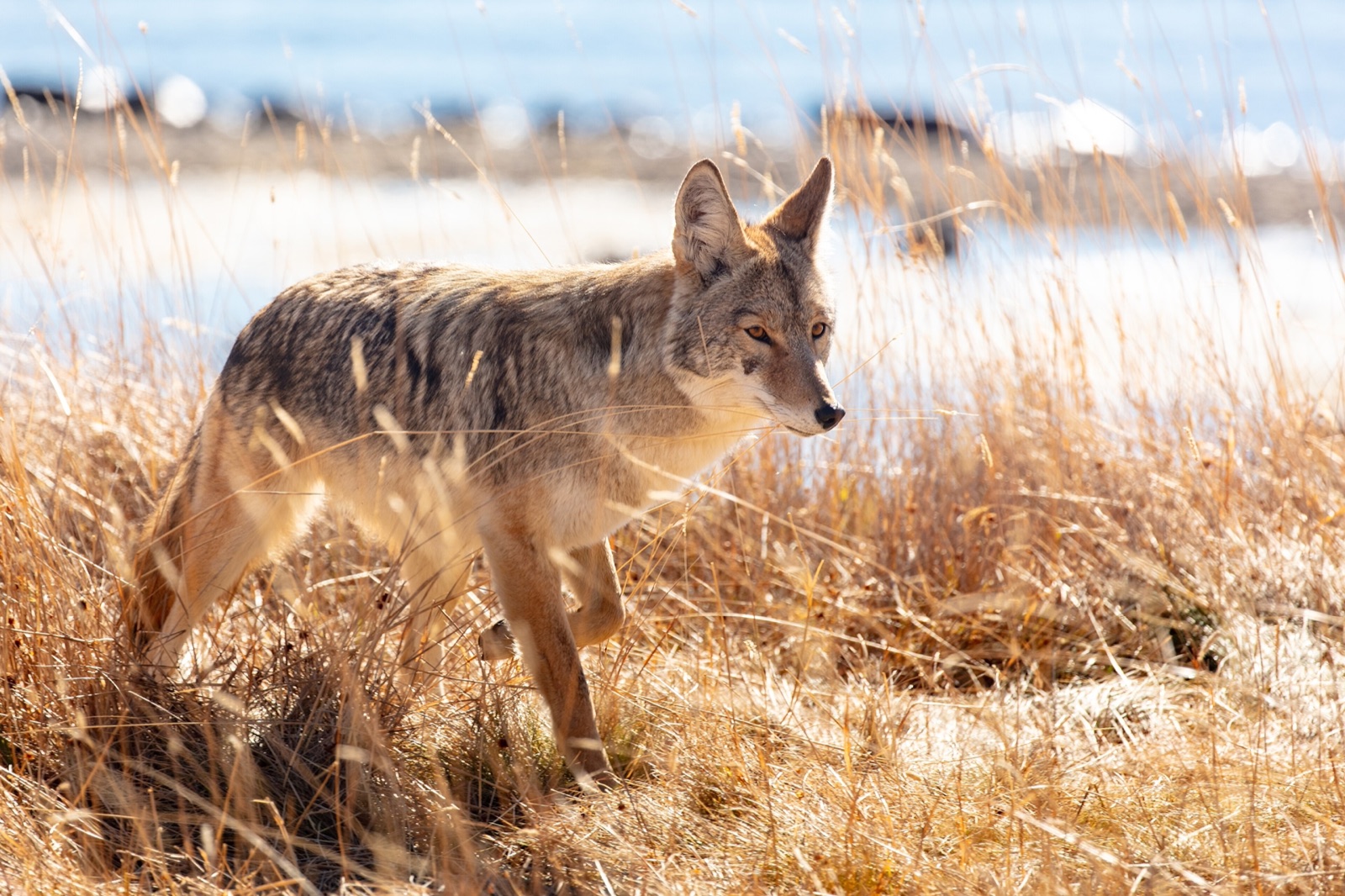
Photo Jacob W. Frank (opens in a new tab), Public domain (opens in a new tab)
Cats are safest indoors
Free-roaming cats face vehicles, dogs, disease, toxins and predation while also hunting native wildlife themselves. Indoor living, secure catios or supervised harness time protect both the cat and wild animals.
Small dogs need supervision
A fenced yard prevents a dog from wandering but does not automatically exclude coyotes, foxes, raptors or other wildlife. Stay with small dogs, especially around dawn, dusk and dense cover. Use a short leash on walks.
Secure small livestock
Chickens, rabbits and guinea pigs resemble natural prey to many species. A truly predator-resistant enclosure needs more than chicken wire: sturdy hardware cloth, secure latches, roof protection and attention to digging gaps.
Vaccination is coexistence infrastructure
Current rabies vaccination and veterinarian-recommended preventive care create a health barrier between domestic animals and wildlife. That protects people, pets and wild animals alike.
What to do
- Keep cats indoors or in secure enclosures.
- Supervise small dogs outside.
- Use a short leash on walks.
- Secure poultry and small mammals in robust enclosures.
- Remove outdoor pet food after meals.
- Keep veterinary vaccinations and parasite prevention current.
Pet safety and wildlife compassion are compatible. The strongest protection is management we control—where our pets go, what they can access and what predators can reach—not campaigns to remove every wild animal from a shared landscape.