
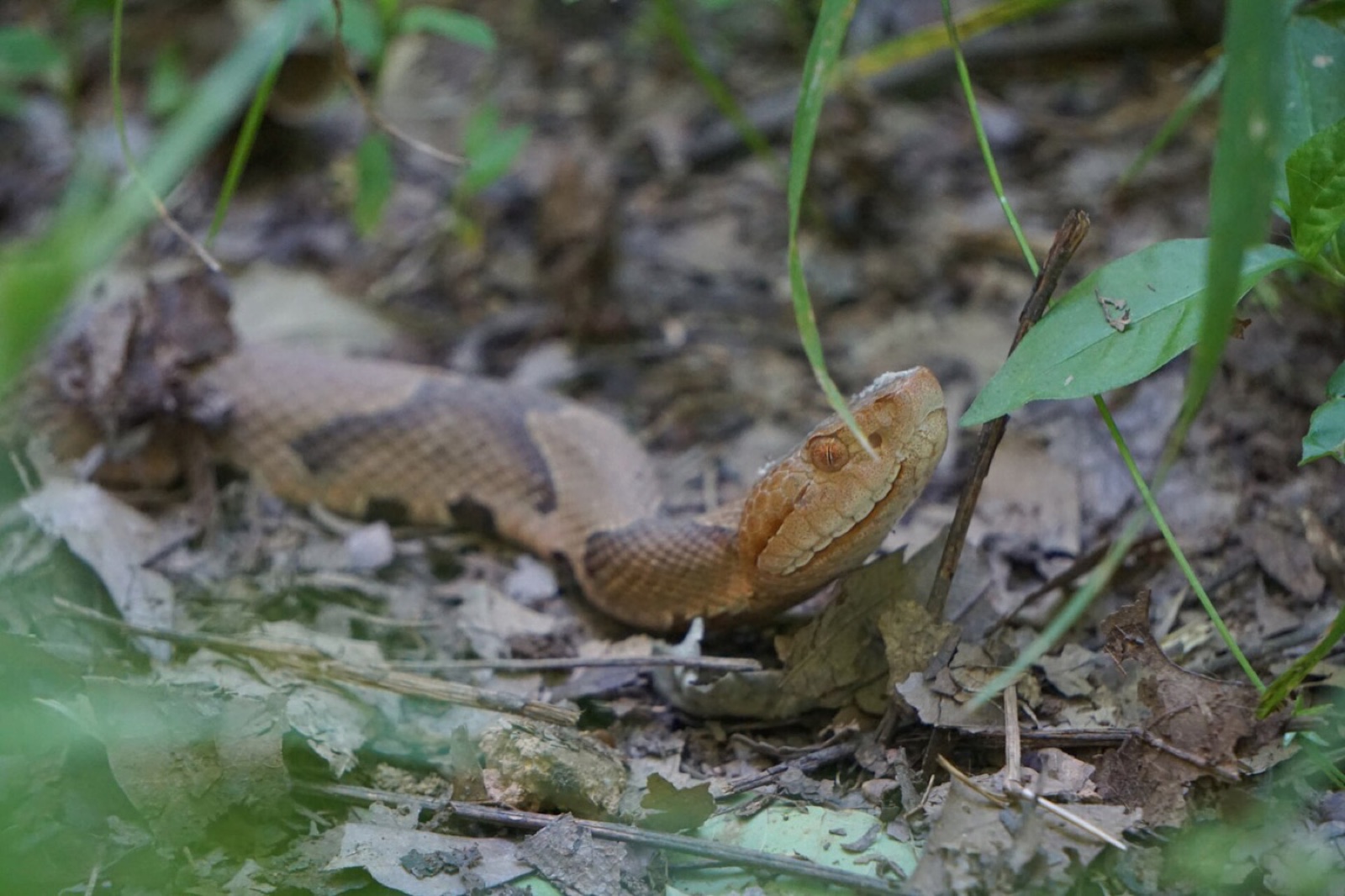
Photo NPS (opens in a new tab), Public domain (opens in a new tab)
Keep the pet quiet
Movement can increase circulation and worsen the consequences of envenomation. Carry a small pet if it can be done safely. Keep a larger dog on the shortest practical path to the vehicle and avoid excitement.
Skip the folk remedies
Do not use ice, a tourniquet, incision, suction or electric shock. Merck Veterinary Manual notes that these measures are ineffective or potentially harmful. Do not give human pain medications unless a veterinarian specifically directs you.
Identification helps, but safety comes first
A photo taken from a safe distance may assist the veterinarian, but do not risk another bite by trying to capture or kill the snake. Veterinary treatment may include monitoring, fluids, pain control, bloodwork and antivenom depending on the case.
What to do
- Move people and other pets away from the snake.
- Call the emergency veterinary clinic while you are heading there.
- Keep the pet as calm and still as possible.
- Do not waste time on home remedies.
- Bring a safe photo of the snake if one already exists.
> Safety note: If a venomous snakebite is suspected, seek emergency veterinary care immediately rather than waiting for symptoms to worsen.
The compassionate response is speed, not improvisation. Veterinary teams can treat envenomation; a delay while trying to “draw out” venom can cost valuable time.
Decision point
Is this happening right now?
Answer a few questions and you will get an answer for the animal in front of you, filtered to rehabilitators who may lawfully take it.
Start the guidance flow