
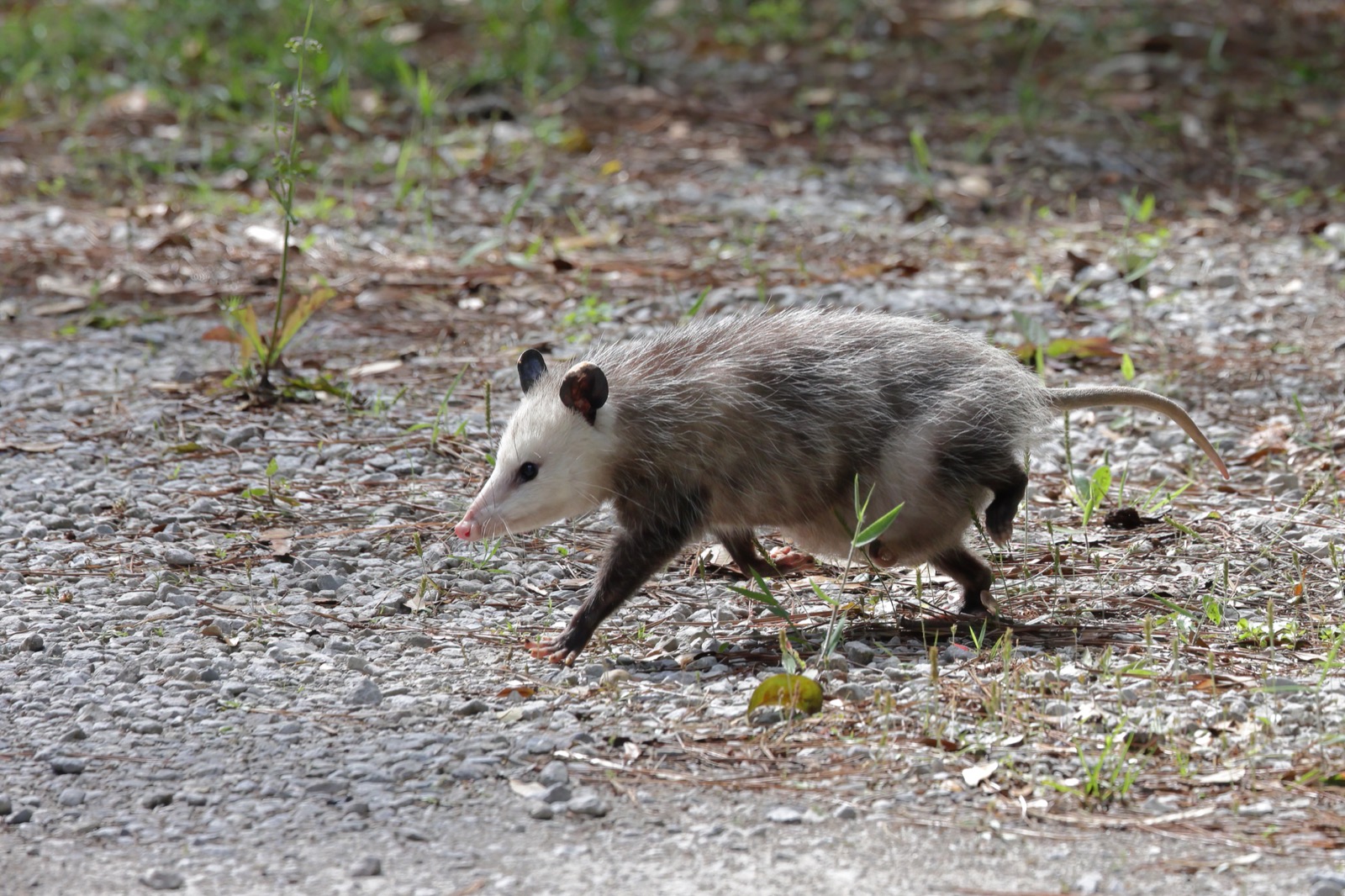
Photo Lauren McLaurin (opens in a new tab), CC BY 4.0 (opens in a new tab)
What opossums contribute
Opossums eat insects, carrion, fruit and many other foods. By scavenging and consuming invertebrates, they participate in nutrient cycling and local food webs. Claims that every opossum is a “tick vacuum” are often oversimplified, but the broader truth remains: opossums are useful omnivores, not pointless pests.
A dramatic mouth is mostly a warning
An opossum may hiss, gape or show many teeth when frightened. That display is designed to persuade a predator to back off. If the threat continues, the animal may become immobile in the famous involuntary “playing possum” response.
Babies need special attention after road deaths
Female opossums carry young in a pouch and later on their backs. If it is safe to do so, trained responders sometimes check a deceased female for surviving young. Untrained handling on a roadway can be dangerous, so human safety comes first.
What to do
- Do not feed or tame opossums.
- Secure trash and pet food.
- Let a healthy opossum move through the yard on its own.
- Keep dogs from cornering one.
- If you find an injured adult or dependent young, contact a licensed wildlife rehabilitator.
Opossums look prehistoric because, in a sense, their body plan really is ancient. They deserve the same courtesy as any other native animal: room to move, freedom from persecution and help only when help is actually needed.