
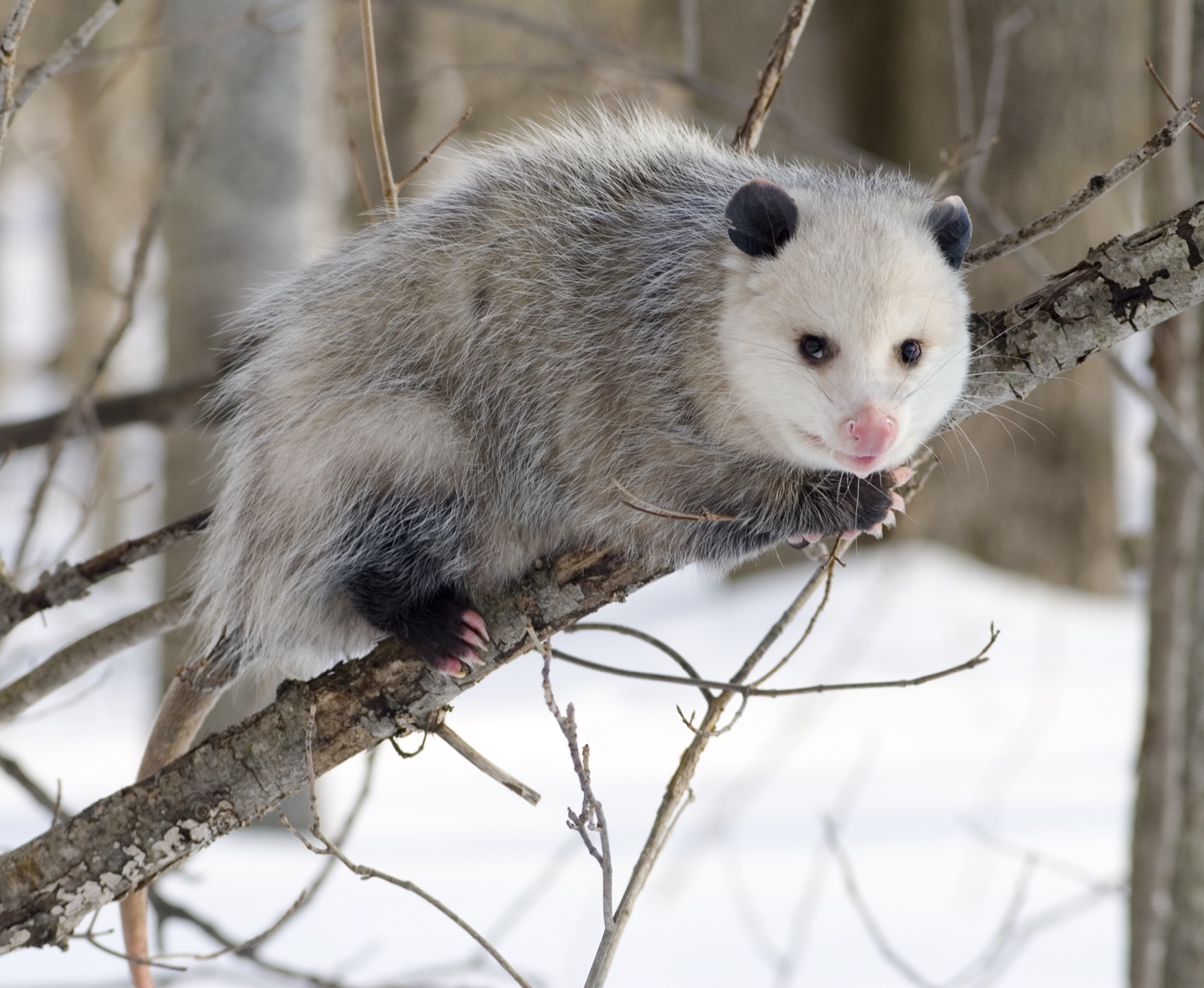
Photo Cody Pope (opens in a new tab), CC BY-SA 2.5 (opens in a new tab)
The biology in plain language
In North America, opossums are the definitive host for Sarcocystis neurona, one of the organisms associated with EPM. They can shed infective stages in feces. Horses may be exposed when feed or water becomes contaminated.
Prevention focuses on feed security
The practical control point is not trying to eliminate every opossum from the landscape. It is reducing wildlife access to grain, supplements and water sources used by horses. Sealed feed containers, prompt cleanup of spills and protected storage reduce opportunities for contamination.
Why coexistence still makes sense
Wildlife exclusion from feed rooms is compatible with humane wildlife values. A barn can be designed so that opossums have no reason or ability to enter feed-storage areas while the surrounding landscape remains wildlife-friendly.
What to do
- Store grain and supplements in wildlife-resistant containers.
- Clean spilled feed immediately.
- Protect hay and discard material suspected of fecal contamination.
- Manage water sources to reduce contamination.
- Keep feed rooms closed and repair access gaps.
- Work with an equine veterinarian on EPM prevention and diagnosis.
> Safety note: EPM diagnosis, prevention and treatment are veterinary matters. Consult an equine veterinarian about an individual horse.
Protecting horses and respecting wildlife are not opposing goals. Good biosecurity targets the transmission pathway—contaminated feed and water—rather than turning a native animal into an enemy.