
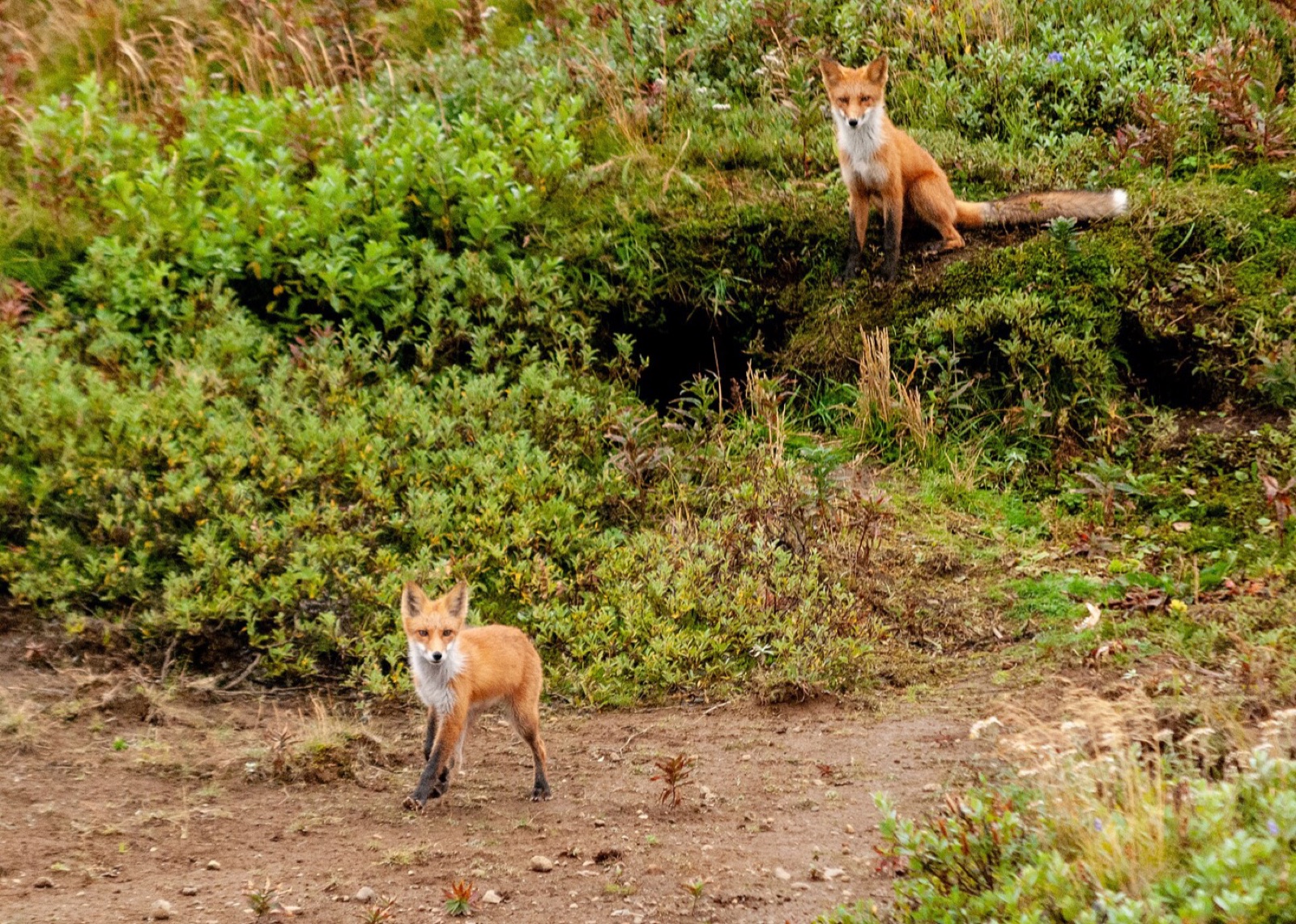
Photo Gordon Leggett (opens in a new tab), CC BY 4.0 (opens in a new tab)
What mange is
Sarcoptic mange is caused by mites that burrow into the skin. The resulting inflammation and intense itching lead to hair loss, skin damage, poor rest and declining condition. A severely affected animal may spend unusual amounts of time in open areas or sunlight, behavior that can be misread as fearlessness.
Why visual diagnosis has limits
Hair loss strongly suggests a skin problem, but photographs cannot confirm every disease. Rabies, distemper, trauma and other illnesses can also alter behavior. The safest approach is to avoid direct contact and consult people trained to assess wildlife rather than attempting home treatment.
Helping without habituating
Wildlife treatment decisions should be directed by licensed rehabilitators or veterinarians who understand the species and local law. Well-meaning medication placed in food can be eaten by the wrong animal, delivered at the wrong dose or create other risks. The humane impulse is good; the treatment plan needs professional oversight.
What to do
- Keep pets on veterinarian-recommended parasite prevention.
- Do not touch or corner the affected animal.
- Keep food attractants secured so the animal does not become habituated while sick.
- Take clear photos or video from a distance to help a qualified rehabilitator evaluate the situation.
- Seek professional guidance before administering any medication.
Compassion begins with seeing the suffering animal rather than a scary silhouette. Mange deserves concern, not demonization. With informed intervention when appropriate, many affected wild canids can recover.