
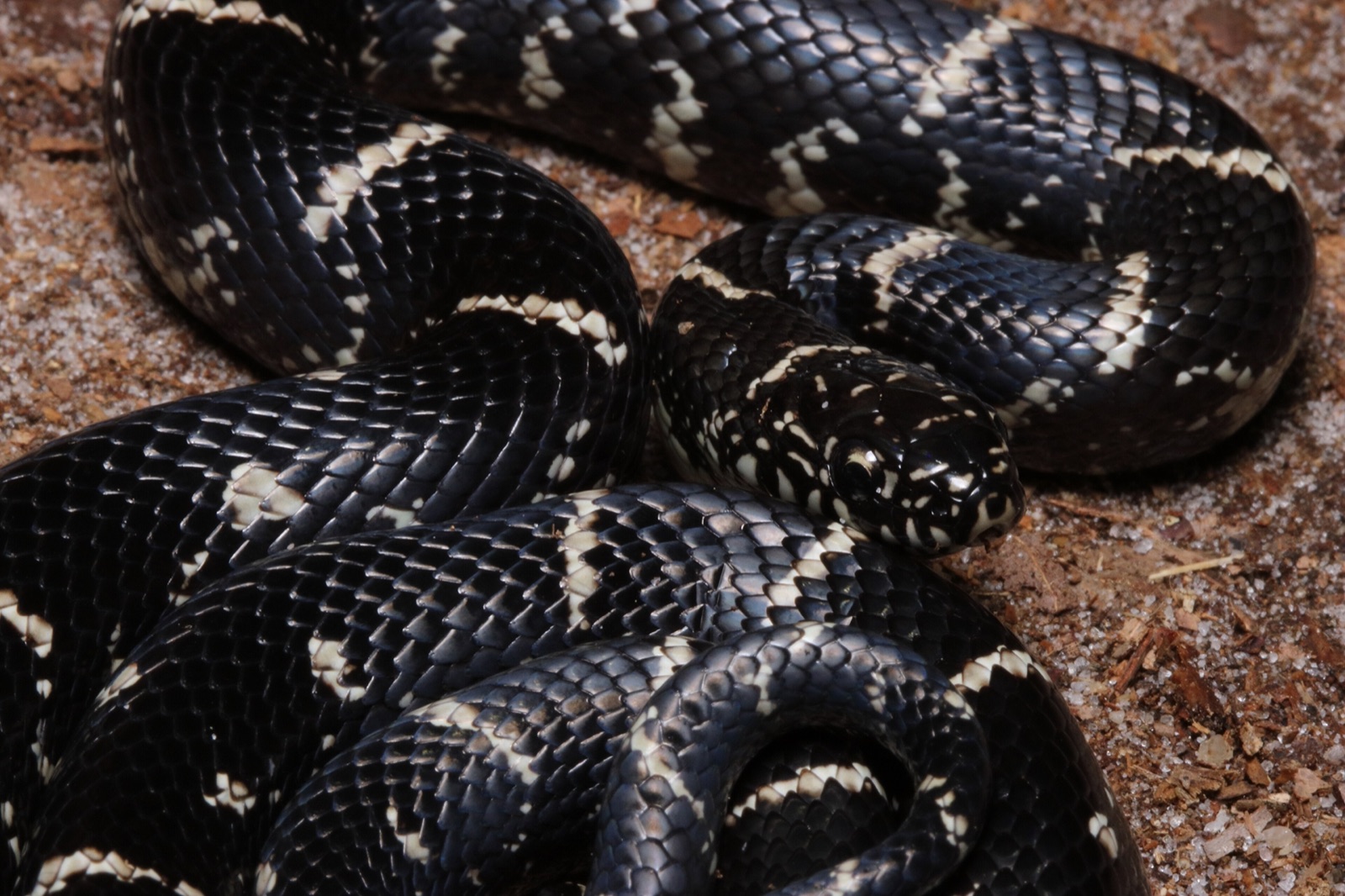
Photo Riley Stanton (opens in a new tab), CC BY-SA 4.0 (opens in a new tab)
Powerful constrictors
Kingsnakes subdue many prey items by constriction and are remarkably strong for their size. Their diet can include rodents, lizards, birds, turtle eggs and other snakes.
Venom resistance
Kingsnakes have resistance to the venom of several pit vipers, allowing them to prey on species such as copperheads and rattlesnakes. Resistance is not magic invulnerability, but it is a remarkable evolutionary adaptation.
Why killing a kingsnake is especially backwards
People sometimes kill any snake before identifying it. That removes a protected, harmless predator and may eliminate one of the very animals that naturally consumes other snakes.
What to do
- Leave kingsnakes alone outdoors.
- Learn local banding and color patterns rather than assuming every dark snake is dangerous.
- Avoid glue traps and other indiscriminate pest-control devices.
- Keep natural cover such as logs and leaf litter in low-conflict parts of a property.
- Celebrate sightings as signs of a functioning food web.
Kingsnakes are a perfect species for turning fear into fascination. The more people learn about what these snakes actually do, the harder it becomes to justify killing first and identifying later.