
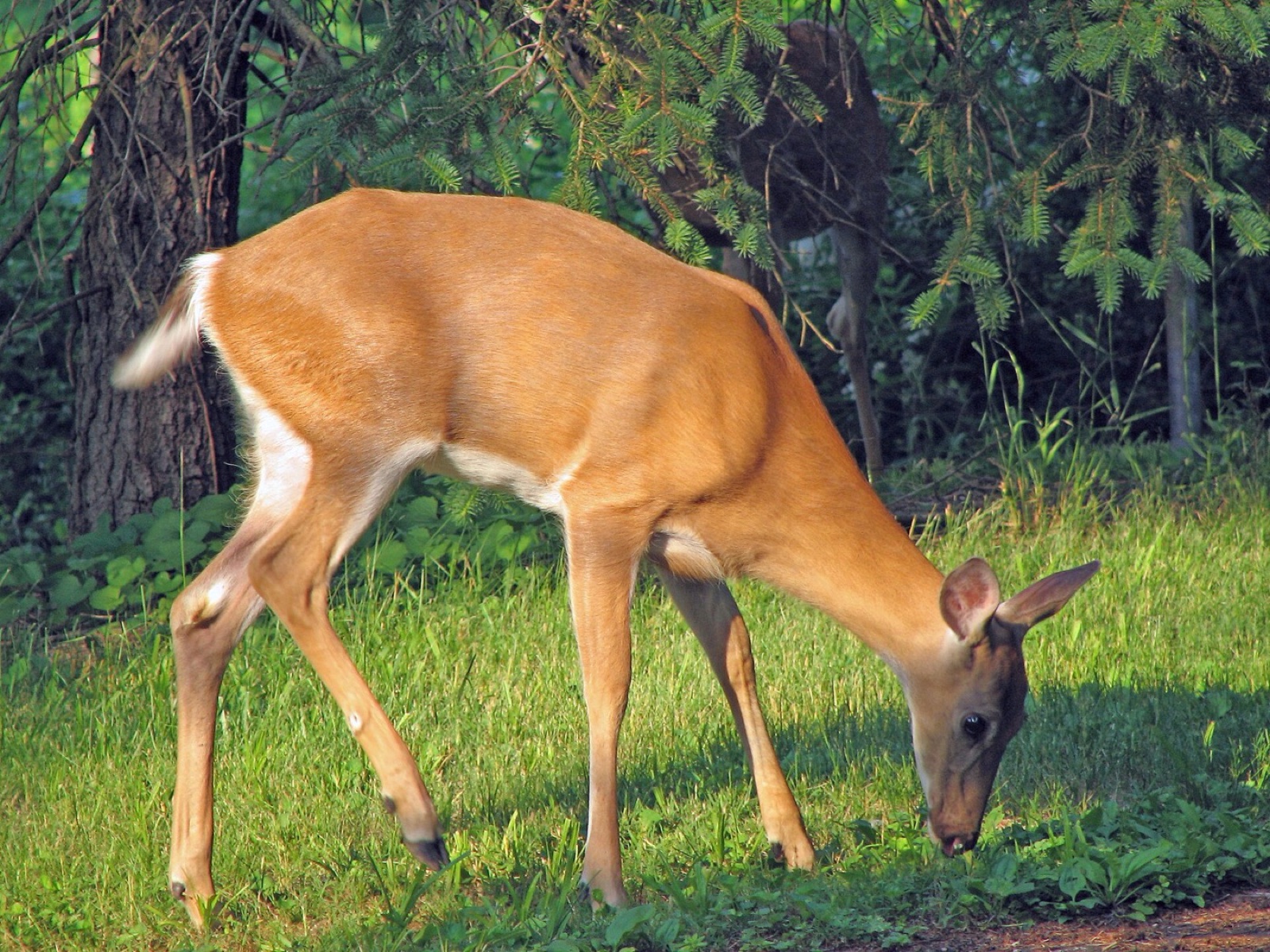
Photo James St. John (opens in a new tab), CC BY 2.0 (opens in a new tab)
Start with distance
Do not chase an injured deer through a neighborhood. Observe gait, alertness, breathing, bleeding and whether it can move away normally. Photos or video from a distance can help a wildlife professional evaluate severity without forcing the animal to run.
Why capture can be dangerous
Capture myopathy is a potentially fatal stress-related syndrome seen in deer and other wildlife. The risk is one reason adult deer are not handled like domestic livestock. Intervention decisions should be made by wildlife professionals who can balance the injury against the risks of capture.
Not every visible injury is immediately fatal
Wildlife can compensate for some injuries that look dramatic to people. Conversely, head, spinal, pelvic or multiple-limb injuries can be devastating. There is no one-size-fits-all answer from a photograph, and feeding or medicating the deer on your own can complicate the situation.
What to do
- Keep people and pets away so the deer can rest.
- Do not attempt to rope, corner or transport an adult deer yourself.
- Document the injury without forcing movement.
- Contact a licensed wildlife rehabilitator for assessment.
- For a deer in immediate traffic danger, keep well clear of the roadway. Nothing here is worth being hit for.
> Safety note: Do not approach a mobile adult deer closely. Even an injured deer can kick forcefully and cause serious injury.
Helping an injured deer sometimes means intervening, and sometimes means refusing to turn a survivable injury into a fatal capture event. The humane choice is an informed one, made with experienced wildlife guidance.
Decision point
Is this happening right now?
Answer a few questions and you will get an answer for the animal in front of you, filtered to rehabilitators who may lawfully take it.
Start the guidance flow