
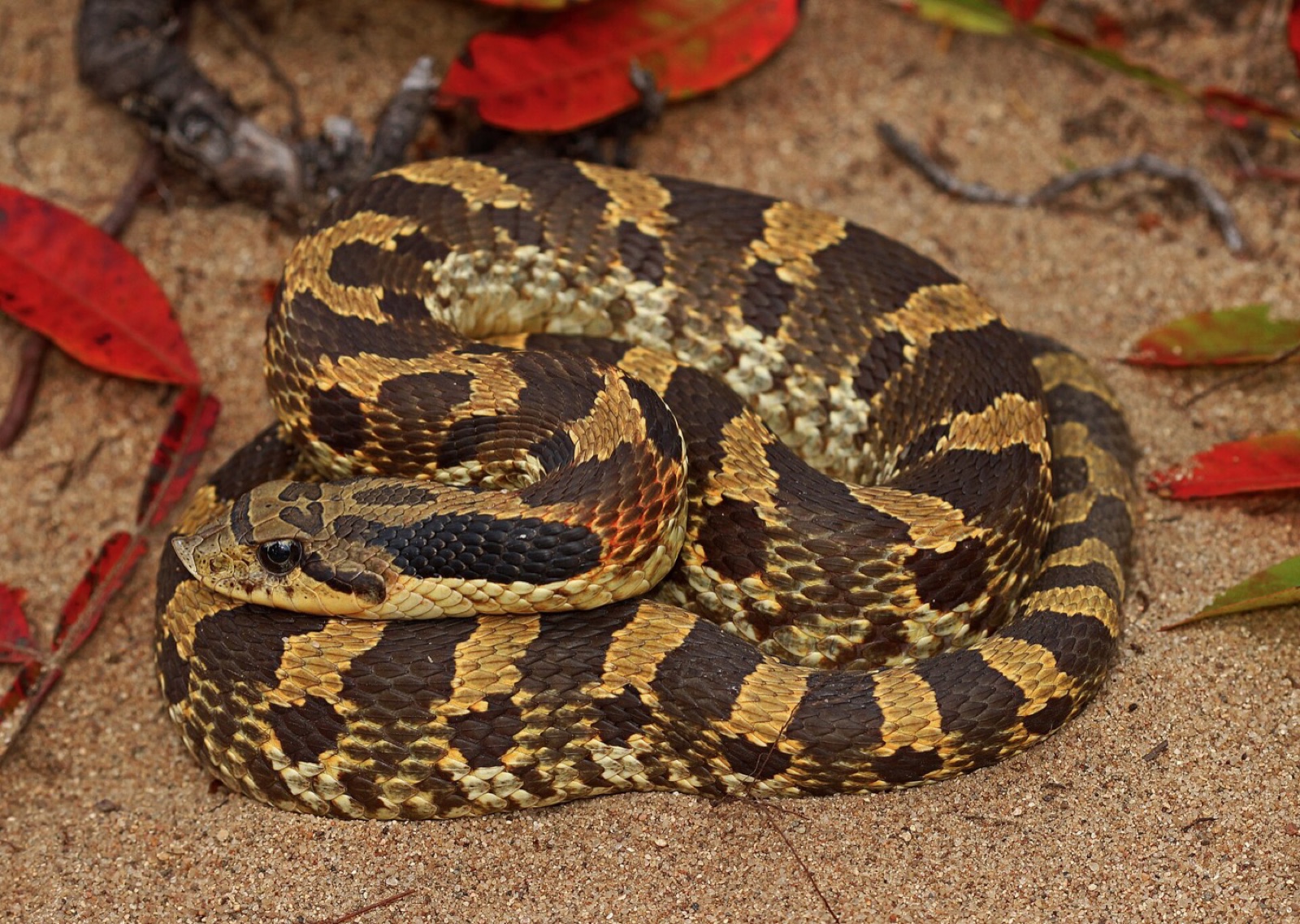
Photo Peter Paplanus (opens in a new tab), CC BY 2.0 (opens in a new tab)
The hognose performance
Eastern hognose snakes are famous for theatrical defense. If bluffing does not work, some roll over, open the mouth and feign death. The display is aimed at convincing a predator that the snake is not worth eating.
Tiny snakes have jobs too
Small yard snakes may feed on slugs, earthworms, amphibians and other invertebrates. Because they are easy to overlook, they are often encountered under mulch, logs, edging stones and garden debris.
Protected does not mean inconvenient
Many states protect native nonvenomous snakes. That legal protection aligns with ecological common sense: these animals are harmless to people and valuable members of the landscape.
What to do
- Replace fear with identification before acting.
- Move garden debris carefully rather than reaching underneath blindly.
- Leave harmless snakes where they are whenever possible.
- Do not keep wild native snakes as pets.
- If a snake is trapped indoors, use humane capture or a qualified remover rather than glue traps.
The snake that looks “weird,” “tiny,” or “dramatic” is often the one most in need of a better public reputation. Once people learn what these species eat and how little danger they pose, the yard becomes a more interesting place.