
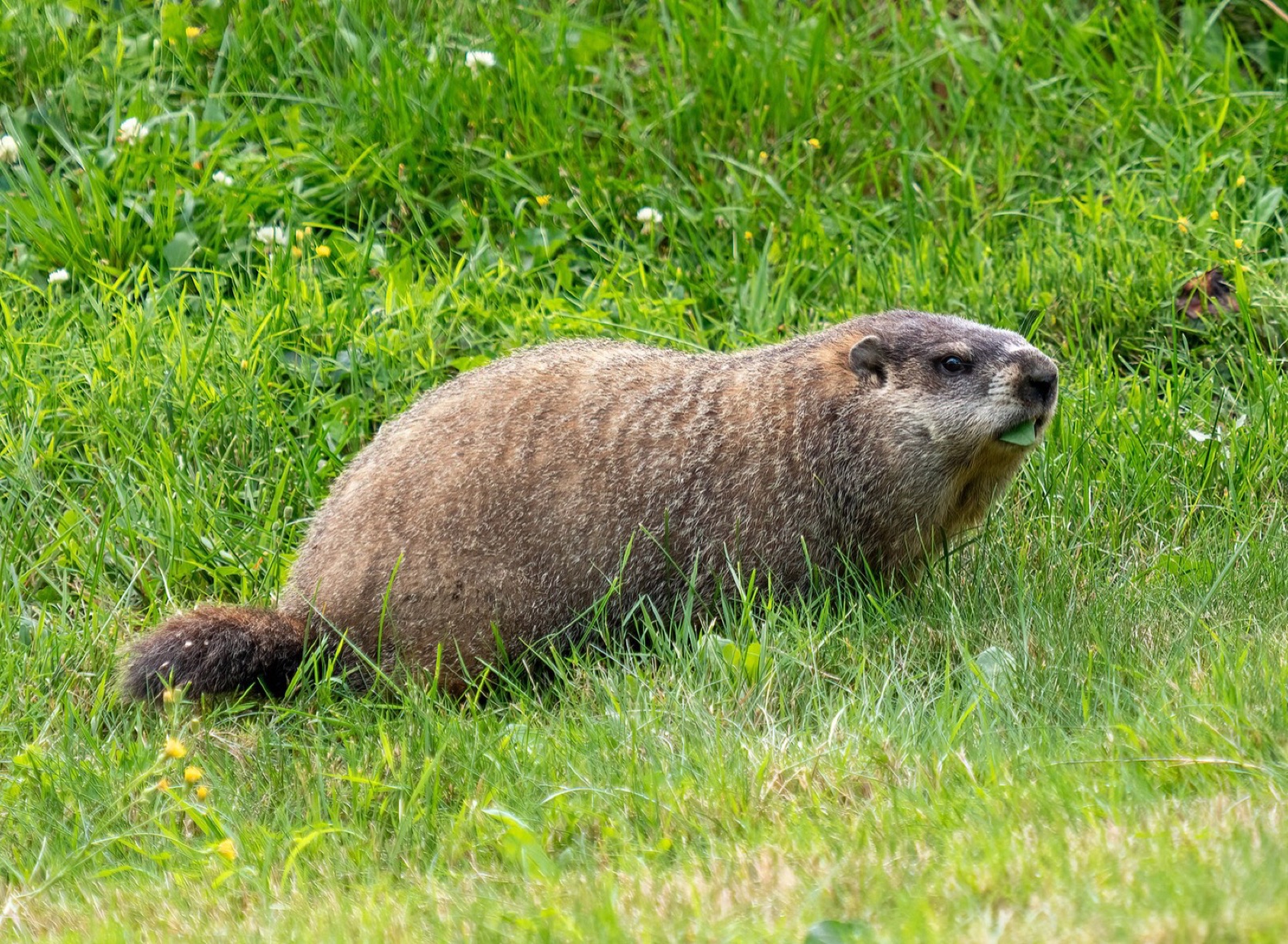
Photo Rhododendrites (opens in a new tab), CC BY-SA 4.0 (opens in a new tab)
Why burrows matter
A groundhog burrow provides protection from weather and predators and can later become habitat for other wildlife. Problems arise when burrowing occurs next to foundations, retaining walls, gardens or other structures.
Vegetation is the invitation
Gardens, tender landscaping and clover-rich lawns can be attractive feeding sites. Barriers and habitat modification often work better long-term than repeatedly removing animals.
Plan exclusion around young
As with foxes, raccoons and skunks, a burrow may contain dependent young. Blocking an entrance without knowing occupancy can create suffering and encourage frantic digging around the barrier.
What to do
- Use sturdy fencing with an outward bend or buried edge where needed.
- Remove fallen produce and other easy food rewards.
- Do not seal a burrow until occupancy is known.
- Protect vulnerable structures with exclusion materials rather than poisons.
- Consult your current state or provincial rules before trapping or moving wildlife.
Groundhog coexistence is mostly an engineering problem. A good barrier protects a garden without requiring us to turn a native herbivore into a villain.