
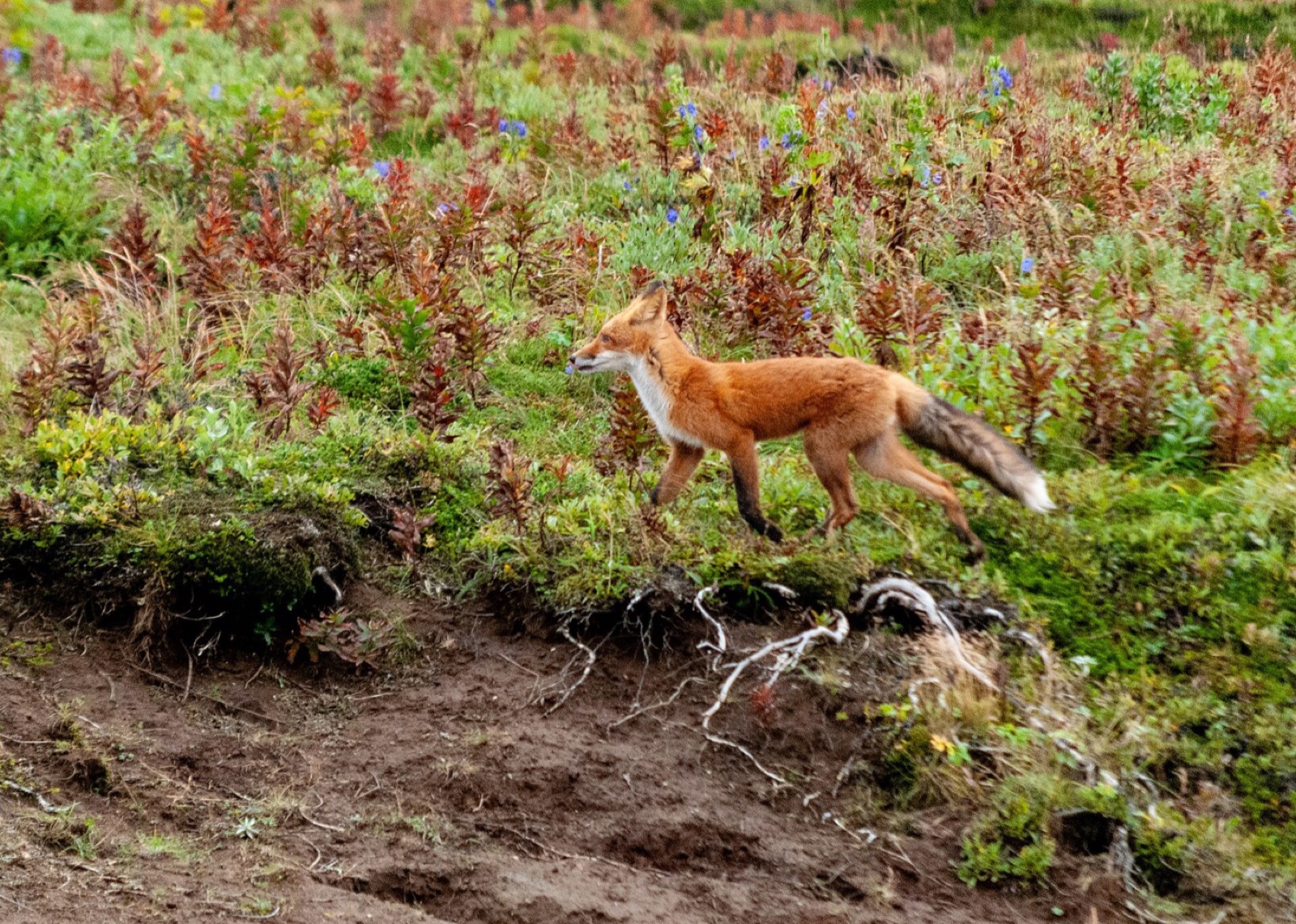
Photo Gordon Leggett (opens in a new tab), CC BY 4.0 (opens in a new tab)
Small predators with a big ecological job
Foxes primarily target small animals such as rodents, along with insects, fruit and other seasonally available foods. A fox hunting mice around a field or subdivision is performing natural pest control. Their presence often reflects usable habitat rather than a danger problem.
Daylight is not a diagnosis
Foxes are often most active around dawn and dusk, but they may be seen during the day, especially when feeding young or when food demands are high. Daylight activity alone does not prove rabies. What matters more is the whole behavioral picture: severe disorientation, paralysis, repeated unprovoked aggression, inability to move normally or other obvious signs of illness warrant professional evaluation.
Foxes and pets
Foxes are generally small and conflict-avoidant. Secure poultry, rabbits and other very small outdoor animals because those can resemble natural prey. Dogs should not be allowed to corner a fox, especially near a den. Keeping pets vaccinated and supervised is good wildlife coexistence regardless of species.
What to do
- Never intentionally feed foxes.
- Secure poultry with sturdy hardware cloth and a roof or covered run.
- Give denning families time and space whenever possible.
- Keep dogs from investigating an active den.
- If a fox appears ill or injured, document behavior from a distance and contact a qualified wildlife professional.
Foxes are not pests wearing pretty coats. They are small, adaptable predators with family lives, communication systems and ecological value. Giving them room to remain wild is usually all they need from us.