
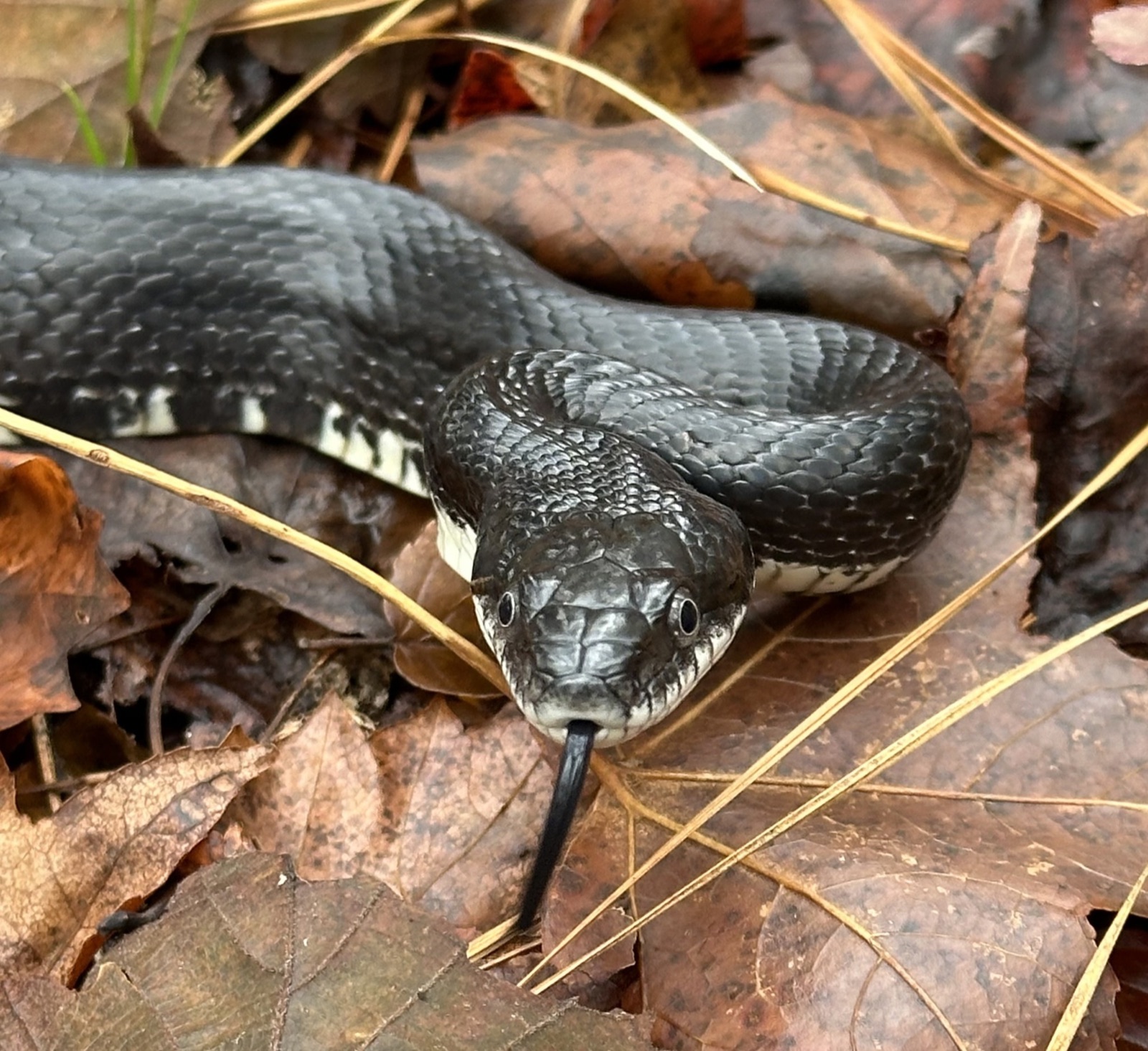
Photo Ashwin Srinivasan (opens in a new tab), CC BY 4.0 (opens in a new tab)
Why they climb
Rat snakes are excellent climbers and may ascend trees, walls and structures while hunting. A snake in a tree is not “acting strange.” It is using three-dimensional habitat the way the species has evolved to do.
Juveniles confuse people
Young rat snakes are gray with dark blotches and can be misidentified as venomous snakes. Adults in much of the region become darker, often black, but geographic variation is substantial.
A better response than relocation
If a rat snake is outdoors and not trapped, leaving it in its home area is usually best. Long-distance relocation can expose wildlife to unfamiliar habitat and new hazards, and many states protect native nonvenomous snakes.
What to do
- Let outdoor rat snakes move on.
- Seal building gaps after confirming no animal is trapped inside.
- Store birdseed and animal feed in rodent-resistant containers.
- Do not kill a snake for eating a wild mouse or chipmunk; that is normal predation.
- Use expert identification before assuming a blotched juvenile is a copperhead.
A rat snake is not a pest-control product, of course—it is a wild animal with its own life. But its presence often means nature is already helping with the rodent problem people worry about most.