
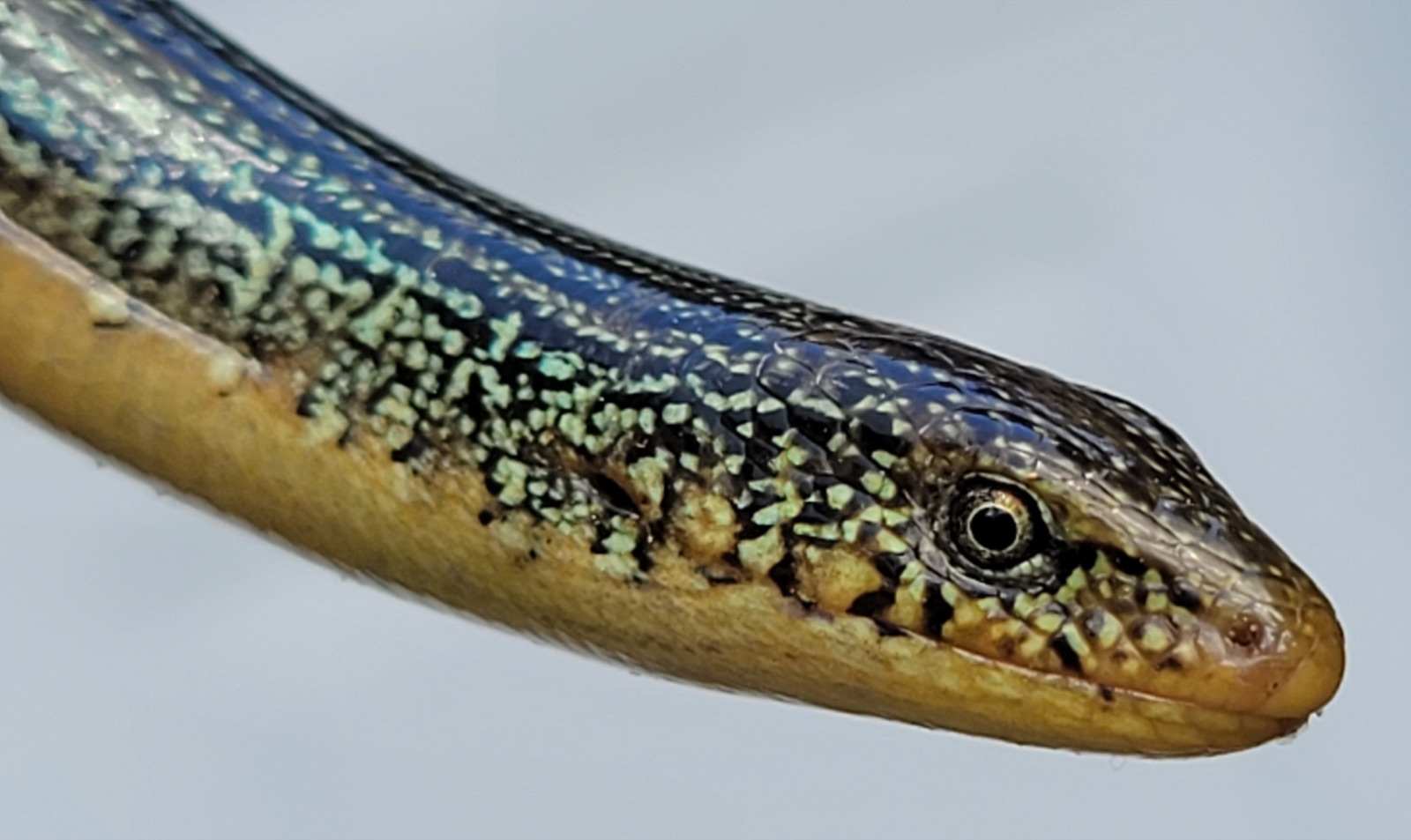
Photo Ignioapathy (opens in a new tab), CC BY-SA 4.0 (opens in a new tab)
How to tell a glass lizard from a snake
Glass lizards have movable eyelids and external ear openings, features snakes lack. Their jaws are also less flexible, which limits the size of prey they can swallow. Much of their total length is tail.
Why the name “glass”
When threatened or grabbed, a glass lizard can shed part of its tail. The detached section wriggles and may distract a predator while the lizard escapes. The tail can regrow, although not instantly and not as a perfect reassembly of the broken piece.
What they eat
Glass lizards consume insects, spiders, snails and other small animals. They are active members of the same backyard food web as snakes, skinks, frogs and insect-eating birds.
What to do
- Do not grab a glass lizard by the tail.
- Let it move through the yard on its own.
- Reduce unnecessary pesticide use so insect prey remains available.
- Use photos from several angles for identification.
- Remember that a legless body does not automatically mean “snake.”
The Eastern glass lizard is a wonderful ambassador for careful observation. The more features we notice, the less likely fear is to fill in the blanks for us.