
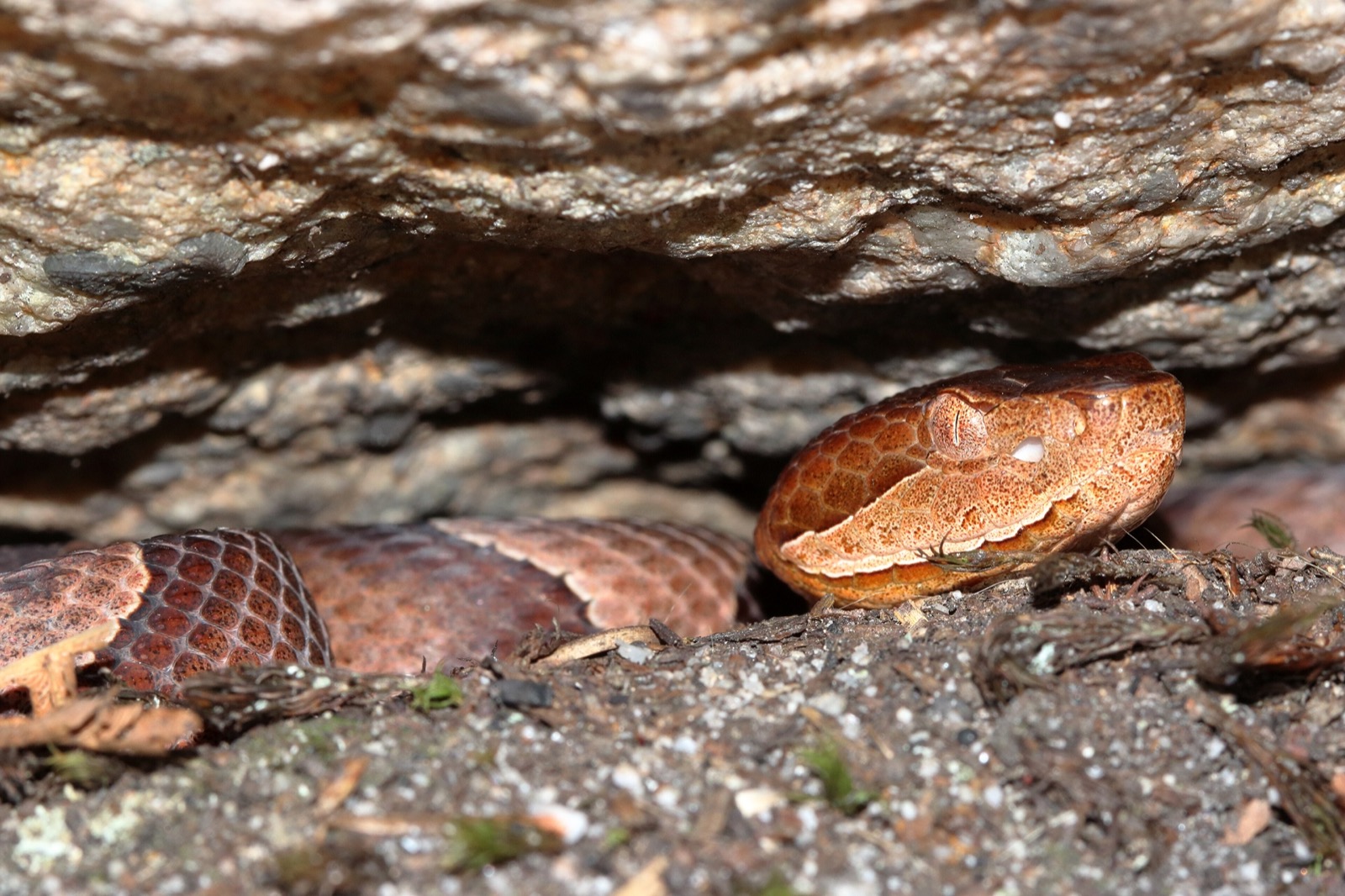
Photo Riley Stanton (opens in a new tab), CC BY-SA 4.0 (opens in a new tab)
The famous hourglass pattern
Viewed from above, dark crossbands are narrow along the spine and widen down the sides, often compared with hourglasses or chocolate “kisses.” Juveniles resemble adults but may have a yellow-green tail tip used to lure prey.
What a copperhead wants
A resting copperhead relies heavily on camouflage and may remain still rather than flee immediately. Stillness is not an ambush on a person. If given space, the snake has no reason to spend precious hunting venom on a giant animal it cannot eat.
Bites are serious but usually treatable
Copperhead bites require prompt medical evaluation. Dry bites can occur, and severity varies, so no one should try to judge the amount of venom by pain or fang marks at home.
Always go to the closest emergency room for evaluation. There is no need to capture and take the snake. CroFab is an intravenous antivenom used to treat venomous snakebites from North American pit vipers, including rattlesnakes, copperheads, and cottonmouths (water moccasins).
What to do
- Wear shoes outdoors and use a light at night.
- Do not place hands or feet where you cannot see.
- Keep pets away from leaf piles and dense edges.
- If you see a copperhead, back away and let it move on. It just wants to escape.
- Use a qualified snake remover when a venomous snake is trapped in a high-use area.
- Most copperhead encounters do not require removing the snake. Just let it go.
Respecting copperheads does not require hating them. They are native predators that deserve distance, not persecution. Situational awareness protects people while allowing the snake to remain part of the ecosystem.