
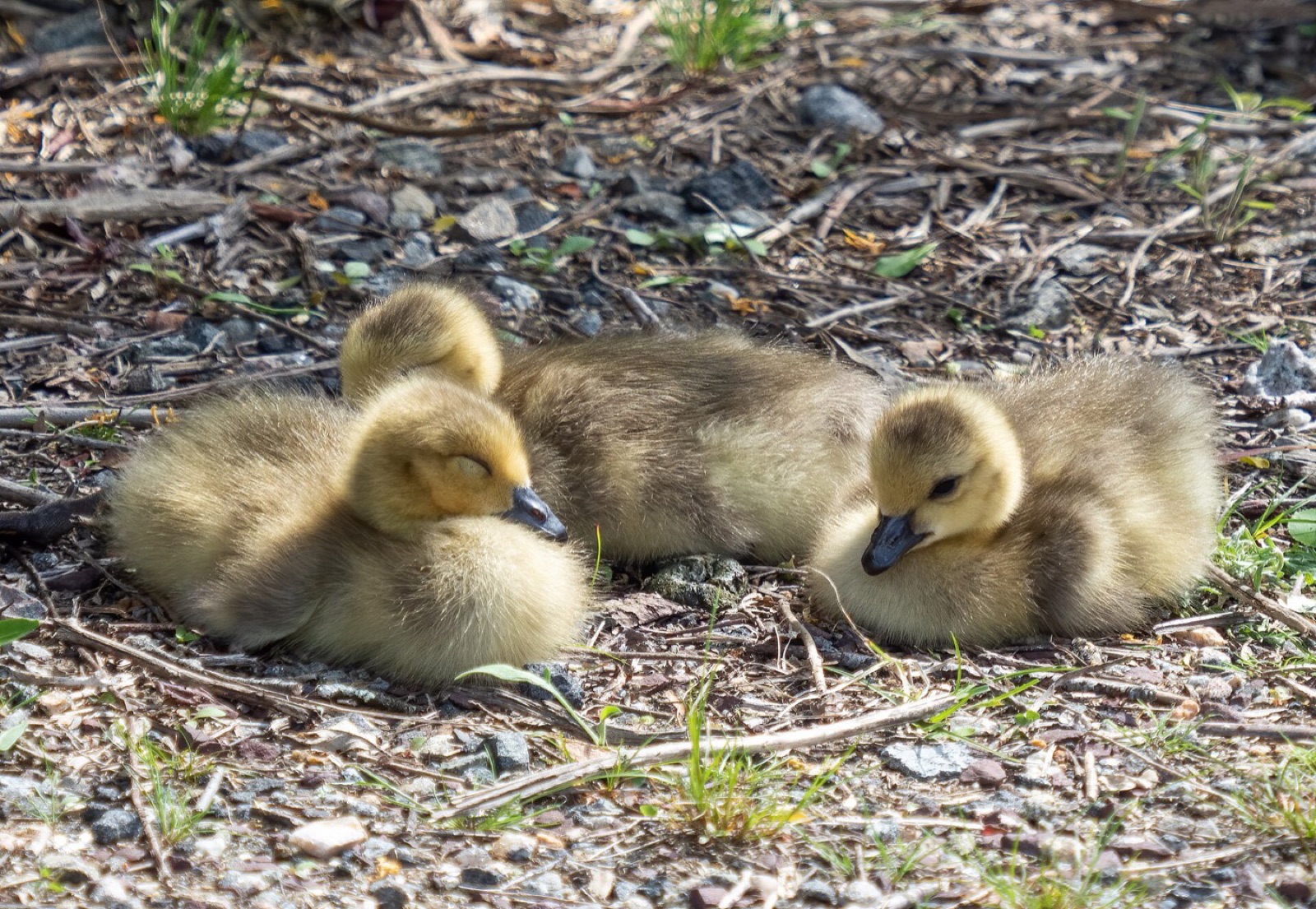
Photo Rhododendrites (opens in a new tab), CC BY-SA 4.0 (opens in a new tab)
Do not casually move an active nest
Canada geese are protected under federal law, and nest or egg management can require authorization. Moving a nest can also cause abandonment. If a nest is in a dangerous location, a licensed rehabilitator can tell you what is permitted before anything is moved. Improvising here is both risky and, often, illegal.
Hatch day can be the real challenge
Goslings can walk soon after hatching, and parents may lead them toward water across roads, curbs or parking lots. In these cases the family usually needs a short, calm gap in traffic more than it needs handling. Slowing down and giving them room does more than picking them up.
A lone adult may be grieving or waiting
Geese form social bonds. An adult lingering near a dead mate is not necessarily injured or in need of capture. Give it time unless there is a separate medical or traffic emergency.
What to do
- Give nests a wide buffer.
- Leash dogs near nesting geese.
- For a road crossing, prioritize human safety and never step into traffic for a bird.
- Do not move eggs or nests without checking legal requirements.
- If a goose is injured, contact a permitted bird rehabilitator.
Helping geese is often about giving them a safe route through a human-built obstacle. Protect the family unit, respect the law and solve the traffic problem rather than treating normal parenting as a wildlife emergency.