
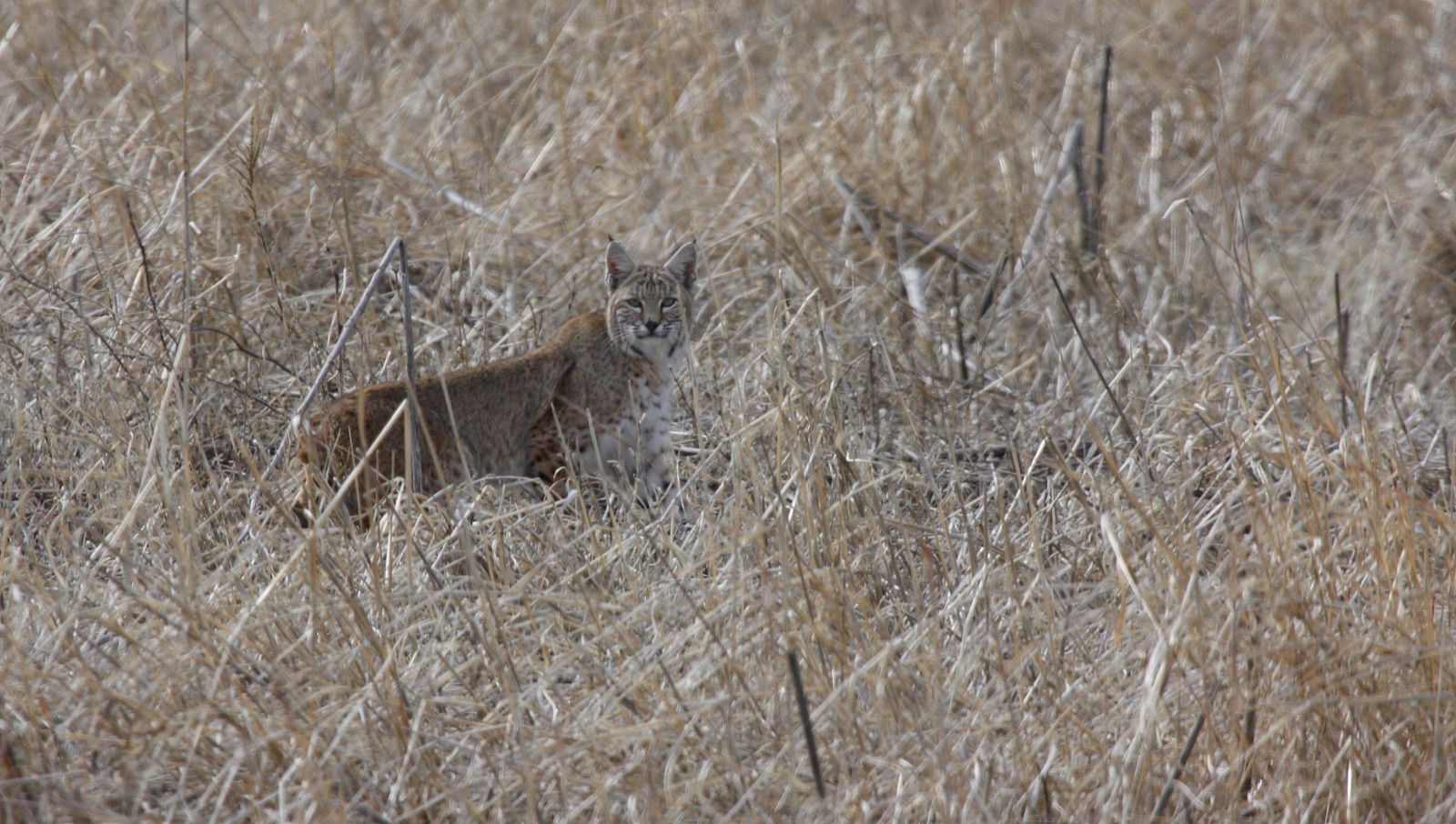
Photo Dominic Sherony (opens in a new tab), CC BY-SA 2.0 (opens in a new tab)
What bobcats eat
Bobcats primarily hunt rabbits, rodents and other small to medium-sized prey. Their ecological role overlaps with coyotes, foxes, owls and other predators that help regulate prey populations. They are solitary, stealthy hunters rather than animals seeking human interaction.
Seeing one does not mean it is hunting you
A bobcat that pauses and looks at a person is gathering information. Most encounters end with the cat leaving once it has assessed the situation. Keep distance, supervise pets and avoid cornering the animal.
Why healthy habitat matters
Bobcats need cover, travel corridors and prey. Fragmented development can force wildlife to cross roads or move through yards. Preserving connected green space helps these animals travel without conflict.
What to do
- Keep cats indoors and supervise small dogs.
- Do not feed bobcats or leave food that attracts prey to doorways.
- Give any bobcat a clear escape route.
- Secure poultry and small livestock in predator-resistant enclosures.
- Report an injured or abnormally behaving animal to qualified wildlife professionals.
A bobcat sighting is not evidence that the woods have become unsafe. It is evidence that a native predator still has enough habitat to survive. Respectful distance is usually all the coexistence plan requires.