
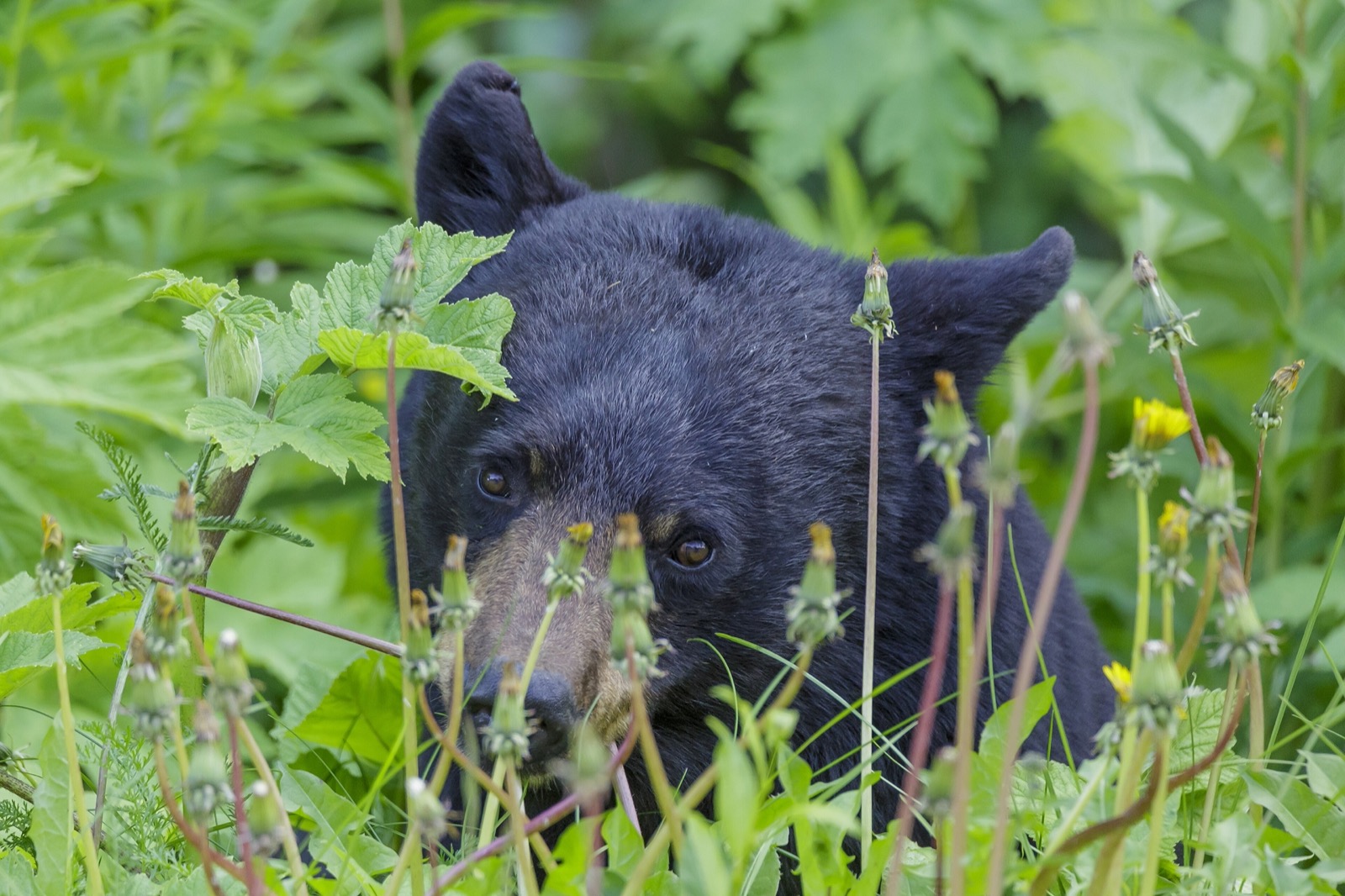
Photo Thomas Fuhrmann (opens in a new tab), CC BY-SA 4.0 (opens in a new tab)
The central rule: food changes behavior
Garbage, birdseed, pet food, grills and food scraps are calorie jackpots. A bear that repeatedly receives these rewards may become bolder, damage property and face a poor outcome. Preventing access is both a human-safety measure and an act of bear protection.
What to do during an encounter
If a bear has not noticed you, enjoy the sight from a distance and quietly move away. If it sees you, back away slowly and do not run. If it approaches, make yourself large and assertive, stay together if in a group and give the bear a clear route to leave. BearWise advises fighting back if a black bear makes physical contact rather than playing dead.
Pets matter too
Dogs should be leashed in bear habitat. A dog that chases or harasses a bear can provoke defensive behavior and then run back toward its owner, bringing the conflict with it.
What to do
- Secure garbage and recycling.
- Remove bird feeders when bears are active.
- Feed pets indoors and store feed securely.
- Clean and store grills.
- Never intentionally feed or approach a bear.
- Carry bear spray in bear country and know how to use it.
The kindest thing we can do for a bear is help it remain wary, self-sufficient and wild. A neighborhood that removes food rewards can often turn a bear sighting back into what it should be: a brief encounter with a remarkable native animal.