
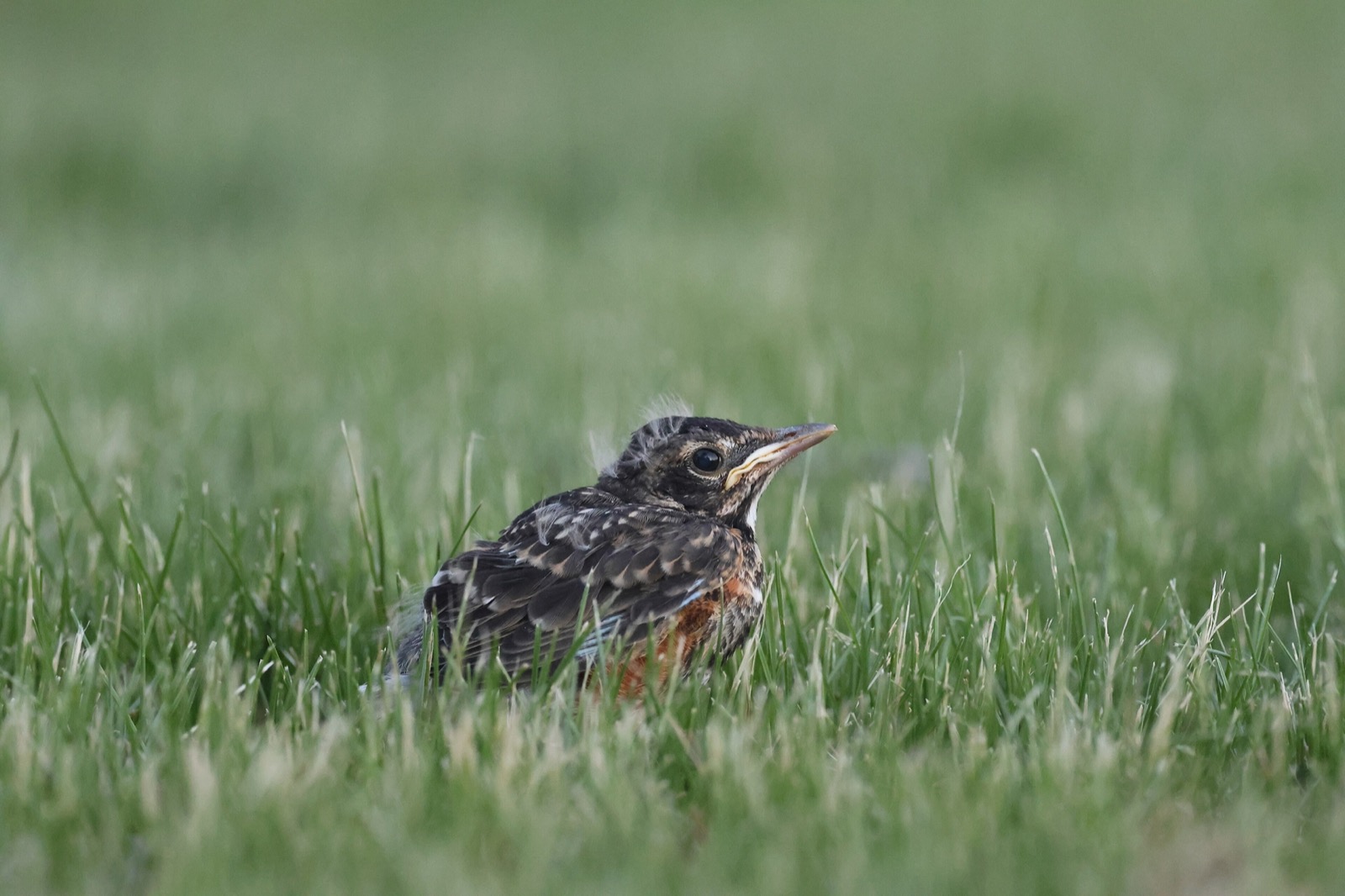
Photo USFWS Mountain Prairie (opens in a new tab), Public domain (opens in a new tab)
Fledglings usually belong on the ground
A mostly feathered bird that can hop, perch or flutter is often a fledgling. If it is in immediate danger, move it only a short distance to nearby cover or a low branch. Keep pets away and watch from far enough back that parents feel safe returning.
Nestlings usually belong in the nest
A sparsely feathered baby that cannot perch is more likely a nestling. If the original nest is accessible and the bird is uninjured, placing it back is often appropriate. Parent birds do not abandon babies merely because a human touched them.
When rehabilitation is needed
Visible injury, a known dead parent pair, a cat encounter, severe weakness or a nestling that cannot be reunited are reasons to contact a licensed bird rehabilitator. Do not drip water into a baby bird’s mouth; aspiration can be fatal.
What to do
- Keep cats indoors during nesting season.
- Return an uninjured nestling to its nest when possible.
- Leave a healthy fledgling near where it was found.
- Do not feed bread, milk or water by syringe.
- Contact a licensed bird rehabilitator for injury, cat contact or true orphaning.
Before rescuing a baby bird, identify its life stage. That single pause prevents countless healthy fledglings from being kidnapped by well-meaning people.