
Species
Wilson's warbler
Cardellina pusilla
A small, yellow warbler with a black cap, a scarce migrant through Georgia.
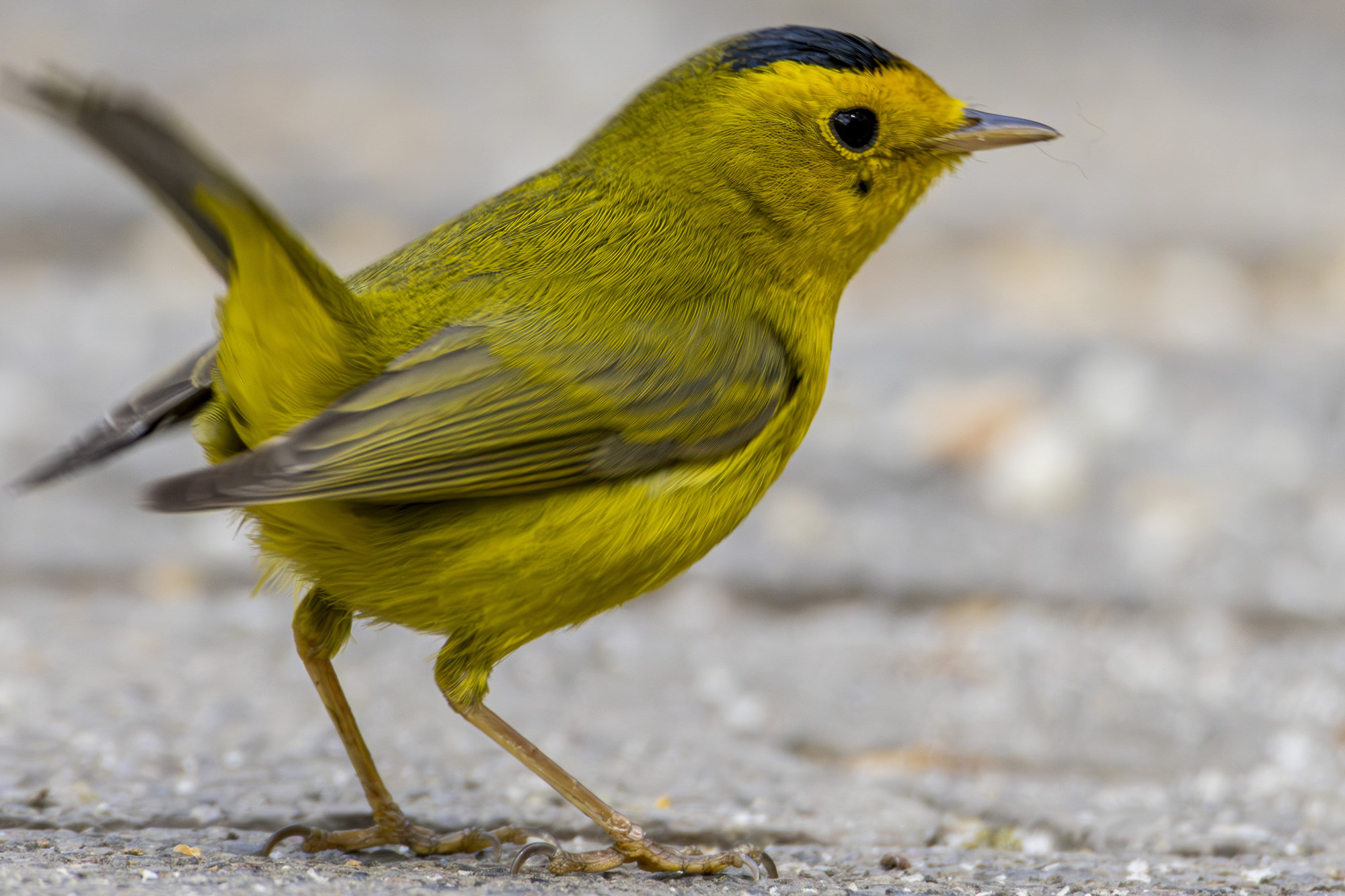
Photo Frank Dietze (opens in a new tab) / iNaturalist, CC BY 4.0 (opens in a new tab)
At a glance
- Size
- About 10 to 12 cm long
- Weight
- About 6 to 10 g
- Habitat
- Shrubby thickets on migration
- Diet
- Insects
- In Georgia
- An uncommon migrant; a few winter
- Voice
- A rapid, chattering song
- Rabies vector
- No
Identification
- Key marks
- Bright yellow; olive back; black cap in males
- Told apart from
- Hooded warbler, whose male has a full black hood
- Where to look
- Thickets during migration
Behaviour
Wilson's warblers forage actively in shrubs, flicking their tails.
Why they matter
Wilson's warblers are among the most abundant warblers in the West; birds reaching Georgia are at the eastern edge of their range.
Reproduction and lifecycle
Nest — A cup on or near the ground
Eggs — Usually four to six
Incubation — About 10 to 13 days
Chicks — Fed by both parents
Lifespan — Several years
Living around people
- Thickets are important on migration.
Misconceptions
- All yellow warblers are yellow warblers. Several species are mostly yellow.
Related species
Seasonal activity
When this species is breeding, and when there are nests on the ground. Mowing during the shaded months is how most nests are found.
| Jan | Feb | Mar | Apr | May | Jun | Jul | Aug | Sep | Oct | Nov | Dec | |
|---|---|---|---|---|---|---|---|---|---|---|---|---|
| Breeding | Jan: no | Feb: no | Mar: no | Apr: no | May: no | Jun: no | Jul: no | Aug: no | Sep: no | Oct: no | Nov: no | Dec: no |
| Active nests | Jan: no | Feb: no | Mar: no | Apr: no | May: no | Jun: no | Jul: no | Aug: no | Sep: no | Oct: no | Nov: no | Dec: no |
| Notes | A few wintering | A few wintering | Few present | Migrating north | Migrants | Nesting in the north and west | Nesting | Migrating | Migrants | Migrants | A few wintering | A few wintering |
Where it lives
Recorded in 88 states and provinces. Each one links to the other animals there, and to the rehabilitators licensed for them.
United States
- Alabamapassing through
- Alaskabreeding
- Arizonapassing through
- Arkansaspassing through
- Californiabreeding
- Coloradobreeding
- Connecticutin winter
- District of Columbiapassing through
- Floridain winter
- Georgiain winter
- Idahobreeding
- Illinoispassing through
- Indianapassing through
- Iowapassing through
- Kansaspassing through
- Kentuckypassing through
- Louisianain winter
- Mainebreeding
- Marylandpassing through
- Massachusettspassing through
- Michiganpassing through
- Minnesotapassing through
- Mississippiin winter
- Missouripassing through
- Montanabreeding
- Nebraskapassing through
- Nevadabreeding
- New Hampshirebreeding
- New Jerseypassing through
- New Mexicopassing through
- New Yorkpassing through
- North Carolinain winter
- North Dakotapassing through
- Ohiopassing through
- Oklahomapassing through
- Oregonbreeding
- Pennsylvaniapassing through
- Rhode Islandpassing through
- South Dakotapassing through
- Tennesseepassing through
- Texasin winter
- Utahpassing through
- Vermontpassing through
- Washingtonbreeding
- Wisconsinpassing through
- Wyomingbreeding
Canada
Mexico
- Aguascalientesin winter
- Baja Californiapassing through
- Baja California Surin winter
- Chiapasin winter
- Chihuahuain winter
- Coahuilain winter
- Colimain winter
- Durangoin winter
- Guanajuatoin winter
- Guerreroin winter
- Hidalgoin winter
- Jaliscoin winter
- Mexico Cityin winter
- Michoacanin winter
- Morelosin winter
- Nayaritin winter
- Nuevo Leonin winter
- Oaxacain winter
- Pueblain winter
- Queretaroin winter
- San Luis Potosiin winter
- Sinaloain winter
- Sonorain winter
- State of Mexicoin winter
- Tabascoin winter
- Tamaulipasin winter
- Tlaxcalain winter
- Veracruzin winter
- Zacatecasin winter
If you found one
Answer a few questions and you will get a specific answer for what you are looking at.
I found an animal