
Species
White-winged scoter
Melanitta deglandi
The largest scoter, a dark sea duck with flashing white wing patches, seen off Georgia's coast in some winters.
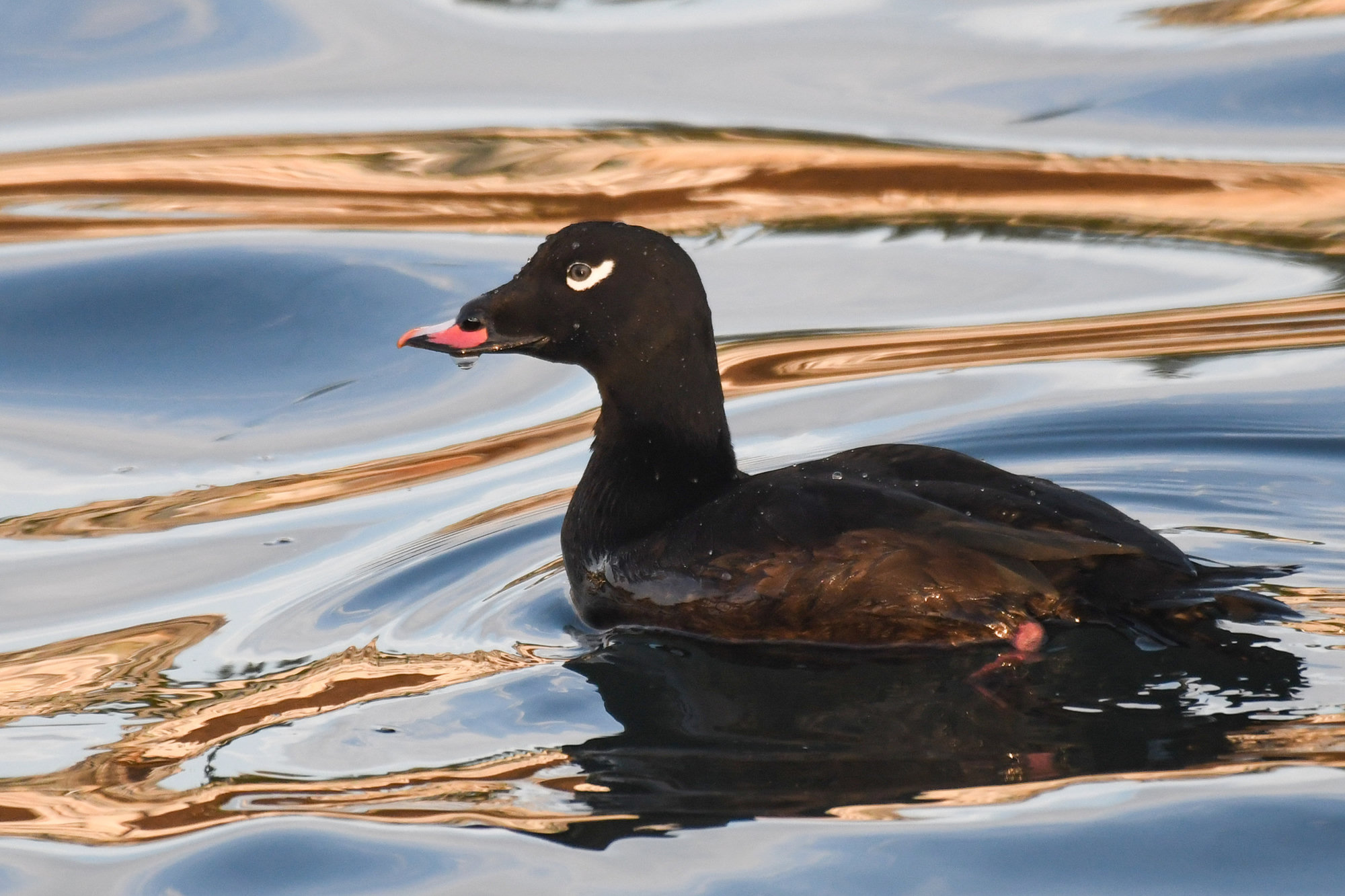
Photo Justin Flint (opens in a new tab) / iNaturalist, CC BY 4.0 (opens in a new tab)
At a glance
- Size
- About 48 to 58 cm long
- Weight
- About 1.2 to 1.9 kg
- Habitat
- Nearshore ocean and large lakes in winter
- Diet
- Clams, mussels and other shellfish
- In Georgia
- A rare to uncommon winter visitor
- Voice
- Mostly quiet
- Rabies vector
- No
Identification
- Key marks
- Heavy, dark body; white patches on the rear of the wing, obvious in flight and often visible on the water
- Male
- Black with a small white comma around the eye and an orange-tipped bill with a black knob
- Female
- Dark brown with two pale face patches
- Told apart from
- Surf and black scoters, which lack white wing patches
- Where to look
- Offshore with other scoters, December to March
Behaviour
White-winged scoters dive for shellfish and can crush thick-shelled clams in their powerful gizzards. They fly heavily and low over the water, often in lines.
Why they matter
These sea ducks eat hard-shelled prey few other birds can use. Their long lives and slow breeding mean populations recover slowly from losses, which makes oil spills and bycatch in fishing nets especially serious for them.
Reproduction and lifecycle
Nest — A down-lined hollow under shrubs near a northern lake
Eggs — Usually 8 to 9
Incubation — About 25 to 30 days
Ducklings — Leave the nest within a day; broods often merge
Flight — At about nine to ten weeks
Lifespan — Wild birds over fifteen years are recorded
Living around people
- A scoter on land cannot take off and should not be put back in the surf; a rehabilitator can check it for oil, injury or exhaustion.
Misconceptions
- Scoters are coots. Hunters call them "coots", but they are sea ducks.
Related species
Seasonal activity
When this species is breeding, and when there are nests on the ground. Mowing during the shaded months is how most nests are found.
| Jan | Feb | Mar | Apr | May | Jun | Jul | Aug | Sep | Oct | Nov | Dec | |
|---|---|---|---|---|---|---|---|---|---|---|---|---|
| Breeding | Jan: no | Feb: no | Mar: no | Apr: no | May: no | Jun: no | Jul: no | Aug: no | Sep: no | Oct: no | Nov: no | Dec: no |
| Active nests | Jan: no | Feb: no | Mar: no | Apr: no | May: no | Jun: no | Jul: no | Aug: no | Sep: no | Oct: no | Nov: no | Dec: no |
| Notes | Wintering at sea | Wintering | Migrating north | Moving north | Arriving on breeding lakes | Nesting begins late | Nesting | Ducklings hatching | Young growing | Migration begins | Arriving on the Atlantic coast | Wintering |
Where it lives
Recorded in 45 states and provinces. Each one links to the other animals there, and to the rehabilitators licensed for them.
United States
- Alaska
- Californiain winter
- Coloradoin winter
- Connecticutin winter
- Delawarein winter
- Floridain winter
- Georgiain winter
- Illinoisin winter
- Indianain winter
- Kentuckyin winter
- Mainein winter
- Marylandin winter
- Massachusettsin winter
- Michiganin winter
- Minnesotain winter
- New Hampshirein winter
- New Jerseyin winter
- New Yorkin winter
- North Carolinain winter
- Ohioin winter
- Oregonin winter
- Pennsylvaniain winter
- Rhode Islandin winter
- South Carolinain winter
- Tennesseein winter
- Utahin winter
- Vermontin winter
- Virginiain winter
- Washingtonin winter
- West Virginiain winter
- Wisconsinin winter
Canada
Mexico
If you found one
Answer a few questions and you will get a specific answer for what you are looking at.
I found an animal