
Species
White-tailed deer
Odocoileus virginianus
North America's most widespread native deer, a browser whose white flagging tail is one of the continent's most familiar wildlife signals.
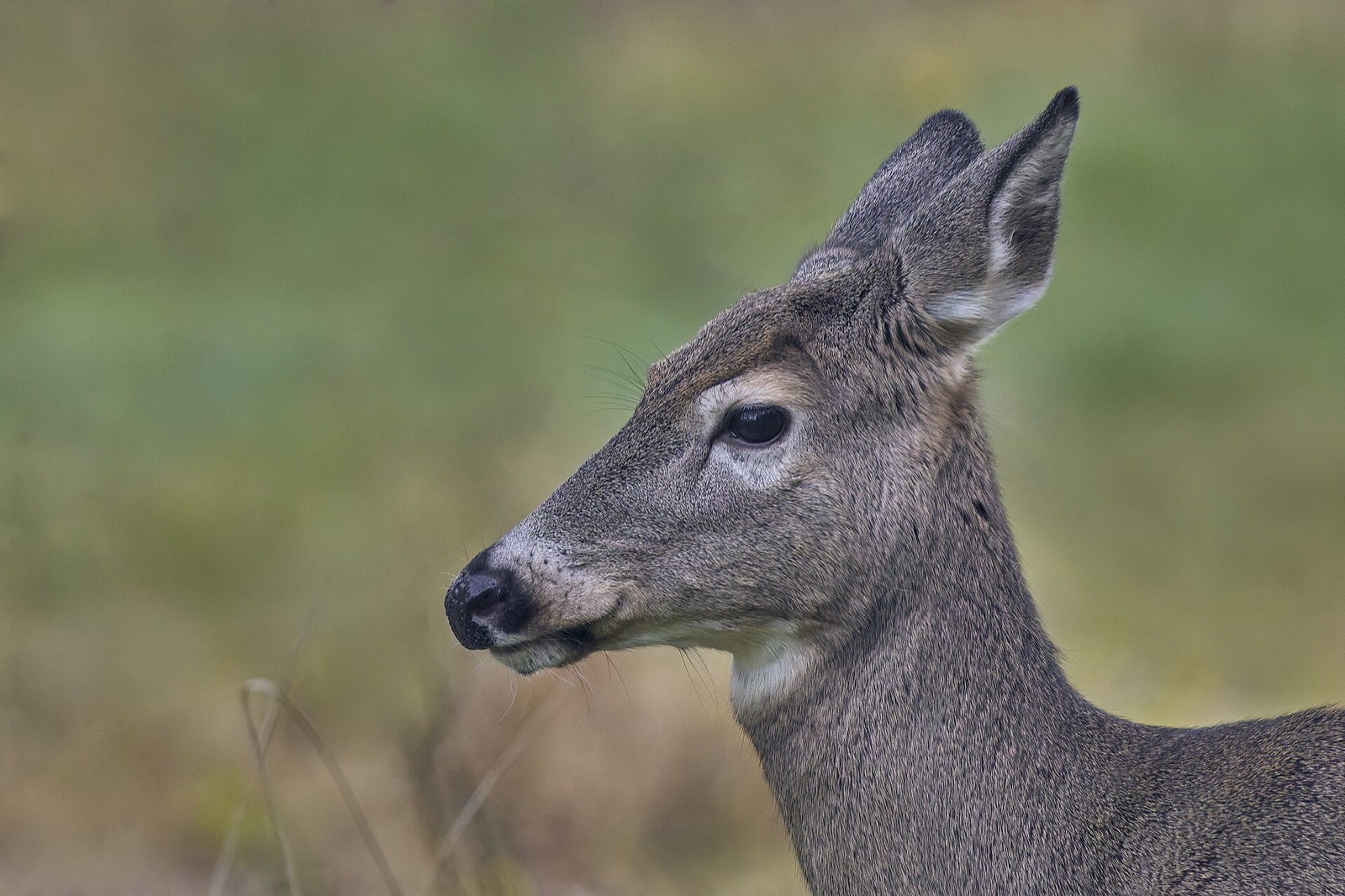
Photo Paul Danese (opens in a new tab), CC BY-SA 4.0 (opens in a new tab)
At a glance
- Occurrence
- Native to North America
- Habitat
- Forests, farms, wetlands, suburban edges and mixed cover
- Diet
- Leaves, shoots, acorns, fruit, agricultural crops and other browse
- Activity
- Crepuscular and nocturnal, with normal daylight activity
- Shelter
- Beds in dense vegetation, forest cover or sheltered edges; no permanent den
- Social pattern
- Females may form family groups; males form loose groups outside the breeding season
- Rabies vector
- No
Identification
- Key marks
- Reddish summer coat or grey-brown winter coat, white throat and belly and a tail that flashes bright white when raised
- Told apart from
- Fallow deer, which is localised and often spotted in adulthood with a longer tail bordered in black
- Where to look
- Forests, farms, wetlands, suburban edges and mixed cover
Behaviour
It is crepuscular and nocturnal, with normal daylight activity. It uses habitats including forests, farms, wetlands, suburban edges and mixed cover. It feeds on leaves, shoots, acorns, fruit, agricultural crops and other browse.
White-tailed deer move along familiar trails between feeding and bedding areas. Seasonal changes in plant growth, acorns and breeding behaviour alter where and when they travel.
Deer browse, seed movement and trails strongly shape understory vegetation, especially where populations are dense.
Why they matter
Deer are major browsers that influence forest regeneration and understory composition. They also disperse seeds and provide food for scavengers and large predators.
The raised white tail is a visual alarm signal that can communicate danger to other deer while the animal bounds into cover.
Reproduction and lifecycle
Rut — most breeding occurs from October through January, with timing varying by region and latitude.
Gestation — about 200 days, roughly 6.5 months.
Fawns — usually one or two are born from late spring into early summer.
Hidden stage — for the first weeks fawns spend long periods lying still while the mother feeds elsewhere.
Weaning — milk use declines over several months, and young remain with the mother into winter or spring.
Living around people
- Drive especially carefully around dawn and dusk and where one deer crosses, expect others behind it.
- Check tall grass before mowing during fawn season; very young fawns rely on hiding rather than running.
- Keep dogs from chasing deer; prolonged pursuit can exhaust an animal and separate mothers from fawns.
- Use deer-resistant planting or fencing rather than feeding deer near homes.
Misconceptions
- A fawn lying alone has been abandoned. Mothers routinely leave young fawns hidden for hours and return to nurse.
- Deer are harmless to approach because they eat plants. Adults are large, powerful wild animals and should be given space.
- More deer always means a healthier ecosystem. High density can suppress forest regeneration and reduce habitat quality for other species.
Related species
- fallow-deer
Seasonal activity
When this species is breeding, and when there are nests on the ground. Mowing during the shaded months is how most nests are found.
| Jan | Feb | Mar | Apr | May | Jun | Jul | Aug | Sep | Oct | Nov | Dec | |
|---|---|---|---|---|---|---|---|---|---|---|---|---|
| Breeding | Jan: no | Feb: no | Mar: no | Apr: no | May: no | Jun: no | Jul: no | Aug: no | Sep: no | Oct: no | Nov: no | Dec: no |
| Active nests | Jan: no | Feb: no | Mar: no | Apr: no | May: no | Jun: no | Jul: no | Aug: no | Sep: no | Oct: no | Nov: no | Dec: no |
| Notes | Rut activity is ending across most of the range; deer shift toward winter food and recovery. | Groups use winter browse and remaining mast; pregnancy continues. | Pregnant females feed on new spring growth as it appears. | Late pregnancy and rapid spring plant growth increase nutritional demand. | Peak fawning begins across much of the range; very young fawns spend long periods hidden alone. | Fawning continues and does remain closely tied to nursery cover. | Fawns grow quickly and travel more often with mothers. | Young lose much of their spotted coat and summer family groups are conspicuous. | Males shed velvet and daylight movement patterns begin shifting toward autumn. | Pre-rut and rut activity begins or peaks in some regions. | Peak rut across many parts of the state; vehicle collisions increase as deer travel widely. | Breeding continues or tapers depending on region; winter groups reform. |
If you found one
Answer a few questions and you will get a specific answer for what you are looking at.
I found an animal