
Species
Red phalarope
Phalaropus fulicarius
A small sea-going sandpiper that spins on the water to feed and winters on the open ocean.
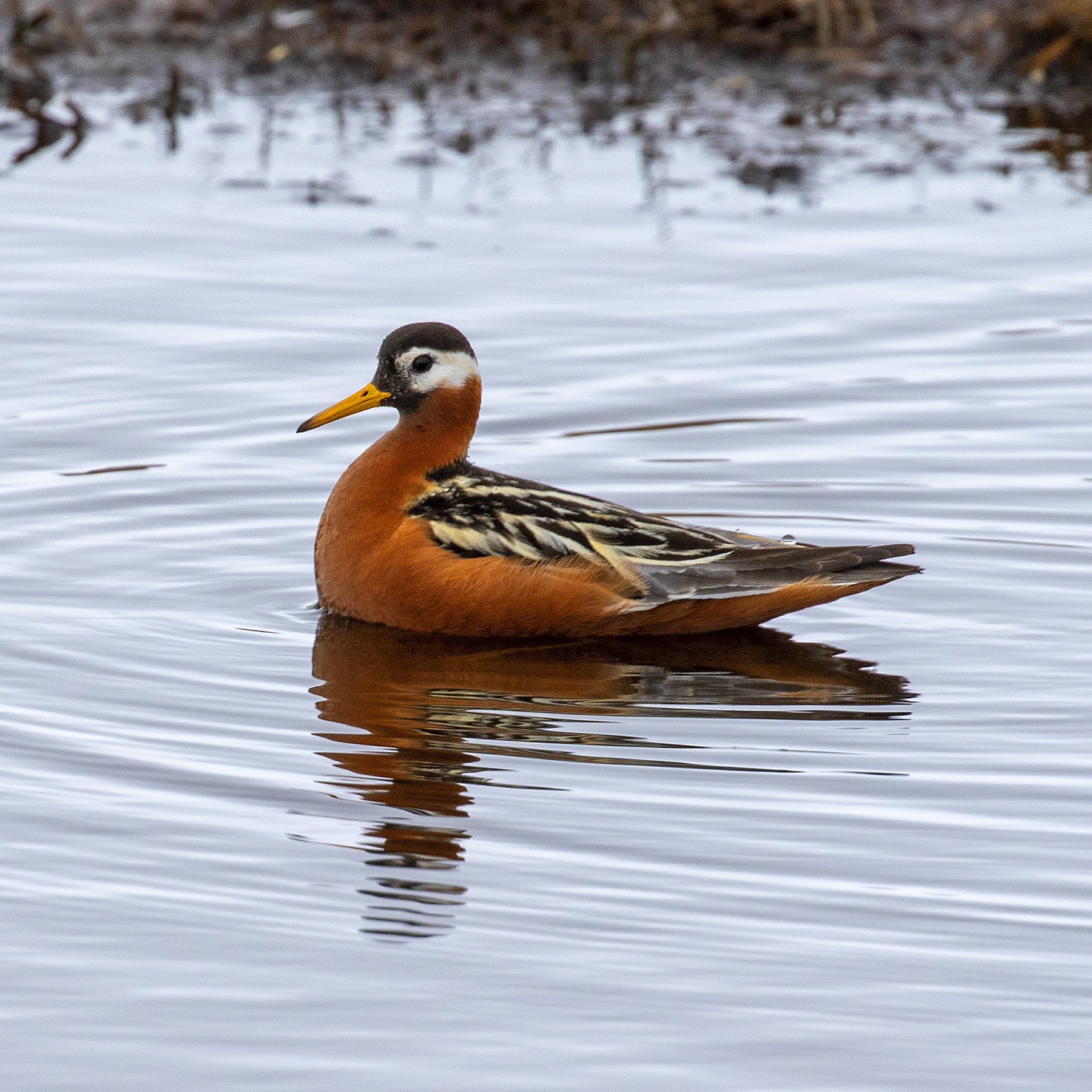
Photo Dan Vickers (opens in a new tab) / iNaturalist, CC BY 4.0 (opens in a new tab)
At a glance
- Size
- About 20 to 22 cm long
- Weight
- About 40 to 80 g
- Habitat
- Open ocean in winter and on migration
- Diet
- Plankton and tiny crustaceans
- In Georgia
- Regular offshore in winter; occasionally blown ashore or inland by storms
- Voice
- A sharp "kip"
- Rabies vector
- No
Identification
- Key marks
- In winter plain pale grey above, white below, with a black patch through the eye and a short, thick bill
- In spring
- Females brick-red below with a white face
- Told apart from
- Red-necked phalarope, which has a thinner bill and a striped back
- Where to look
- Offshore; after storms on ponds near the coast
Behaviour
Red phalaropes spin on the water to bring food to the surface, and feed where currents and upwellings concentrate plankton. Whalers once followed them, knowing whales fed in the same places.
Why they matter
Red phalaropes spend most of their lives at sea. As in other phalaropes, females are brighter and do the courting, while males incubate the eggs and raise the chicks.
Reproduction and lifecycle
Nest — A scrape on Arctic tundra
Eggs — Usually four
Incubation — About 18 to 20 days, by the male
Chicks — Leave the nest within a day, cared for by the male
Flight — At about 16 to 20 days
Lifespan — Several years
Living around people
- A phalarope on a pond after a storm is usually feeding and resting; it needs help only if it cannot fly.
Misconceptions
- A sandpiper swimming is in trouble. Phalaropes swim as their normal way of feeding.
Related species
Seasonal activity
When this species is breeding, and when there are nests on the ground. Mowing during the shaded months is how most nests are found.
| Jan | Feb | Mar | Apr | May | Jun | Jul | Aug | Sep | Oct | Nov | Dec | |
|---|---|---|---|---|---|---|---|---|---|---|---|---|
| Breeding | Jan: no | Feb: no | Mar: no | Apr: no | May: no | Jun: no | Jul: no | Aug: no | Sep: no | Oct: no | Nov: no | Dec: no |
| Active nests | Jan: no | Feb: no | Mar: no | Apr: no | May: no | Jun: no | Jul: no | Aug: no | Sep: no | Oct: no | Nov: no | Dec: no |
| Notes | Offshore | Offshore | Offshore | Migrating north | Migrating north | Nesting in the Arctic | Males incubating | Migrating south | Migrating | Migrating | Offshore | Offshore |
Where it lives
Recorded in 19 states and provinces. Each one links to the other animals there, and to the rehabilitators licensed for them.
United States
Canada
If you found one
Answer a few questions and you will get a specific answer for what you are looking at.
I found an animal