
Species
Red-breasted nuthatch
Sitta canadensis
A small, rusty-bellied nuthatch of northern conifers that irrupts south into Georgia in some winters.
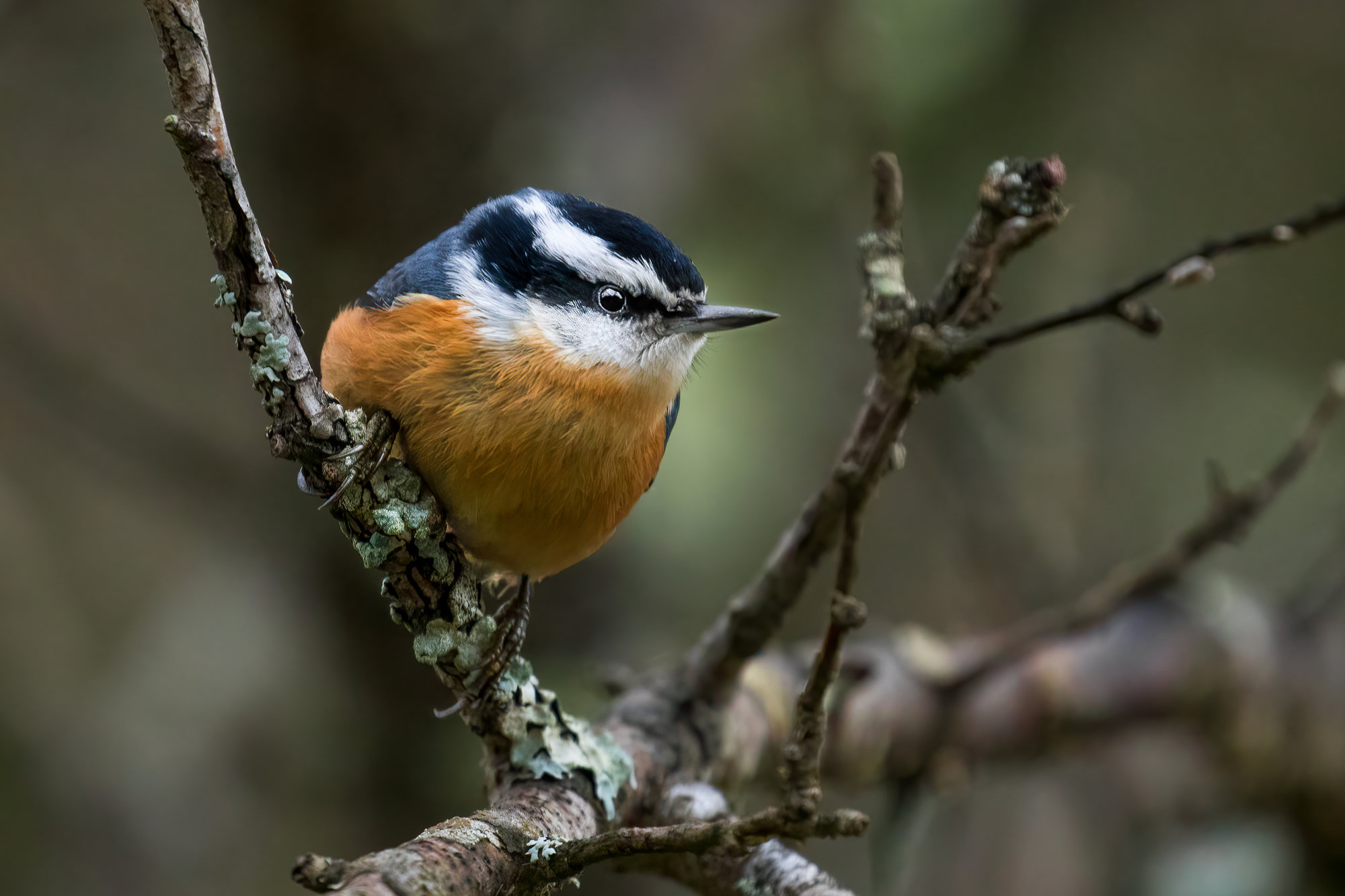
Photo Matt Felperin (opens in a new tab) / iNaturalist, CC BY 4.0 (opens in a new tab)
At a glance
- Size
- About 11 cm long
- Weight
- About 8 to 13 g
- Habitat
- Conifers and mixed woods
- Diet
- Conifer seeds and insects
- In Georgia
- An irregular winter visitor; a few nest in the high mountains
- Voice
- A nasal, tinny "yank-yank"
- Rabies vector
- No
Identification
- Key marks
- Blue-grey back; black cap; white eyebrow; black eye-line; rusty underparts
- Told apart from
- White-breasted nuthatch, which is larger with a white face and breast
- Told apart from
- Brown-headed nuthatch, which has a brown cap
- Where to look
- Pines and feeders in irruption winters
Behaviour
Red-breasted nuthatches climb head first down trees, picking insects from bark. They smear sticky resin around their nest holes, perhaps to keep out predators and competitors.
Why they matter
When conifer seed crops fail in the north, red-breasted nuthatches move south in large numbers, bringing them to Georgia feeders in some winters. Their irruptions help scientists track seed crops across the continent.
Reproduction and lifecycle
Nest — A cavity excavated in dead wood, surrounded by resin
Eggs — Usually five to eight
Incubation — About 12 to 13 days
Chicks — Fed by both parents
Flight — At about 18 to 21 days
Lifespan — Several years
Living around people
- Conifers in yards attract them in irruption winters.
Misconceptions
- Nuthatches are woodpeckers. They are songbirds that climb head first down trees.
Related species
Seasonal activity
When this species is breeding, and when there are nests on the ground. Mowing during the shaded months is how most nests are found.
| Jan | Feb | Mar | Apr | May | Jun | Jul | Aug | Sep | Oct | Nov | Dec | |
|---|---|---|---|---|---|---|---|---|---|---|---|---|
| Breeding | Jan: no | Feb: no | Mar: no | Apr: no | May: no | Jun: no | Jul: no | Aug: no | Sep: no | Oct: no | Nov: no | Dec: no |
| Active nests | Jan: no | Feb: no | Mar: no | Apr: no | May: no | Jun: no | Jul: no | Aug: no | Sep: no | Oct: no | Nov: no | Dec: no |
| Notes | Wintering in irruption years | Wintering | Leaving | Nesting in the north and mountains | Nesting | Chicks | Young fledging | Present in the north | Moving south in irruption years | Arriving | Wintering | Wintering |
Where it lives
Recorded in 62 states and provinces. Each one links to the other animals there, and to the rehabilitators licensed for them.
United States
- Alabamain winter
- Alaska
- Arizona
- Arkansasin winter
- California
- Colorado
- Connecticutin winter
- Delawarein winter
- District of Columbiain winter
- Georgiain winter
- Idaho
- Illinoisin winter
- Indianain winter
- Iowain winter
- Kansasin winter
- Kentuckyin winter
- Louisianain winter
- Maine
- Marylandin winter
- Massachusetts
- Michigan
- Minnesota
- Mississippiin winter
- Missouriin winter
- Montana
- Nebraskain winter
- Nevada
- New Hampshire
- New Jerseyin winter
- New Mexico
- New York
- North Carolina
- North Dakotain winter
- Ohioin winter
- Oklahomain winter
- Oregon
- Pennsylvaniain winter
- Rhode Island
- South Carolinain winter
- South Dakota
- Tennesseein winter
- Texasin winter
- Utah
- Vermont
- Virginiain winter
- Washington
- West Virginia
- Wisconsin
- Wyoming
If you found one
Answer a few questions and you will get a specific answer for what you are looking at.
I found an animal