
Species
Northern rough-winged swallow
Stelgidopteryx serripennis
A plain brown swallow that nests in holes in banks, bridges and drainpipes near water.
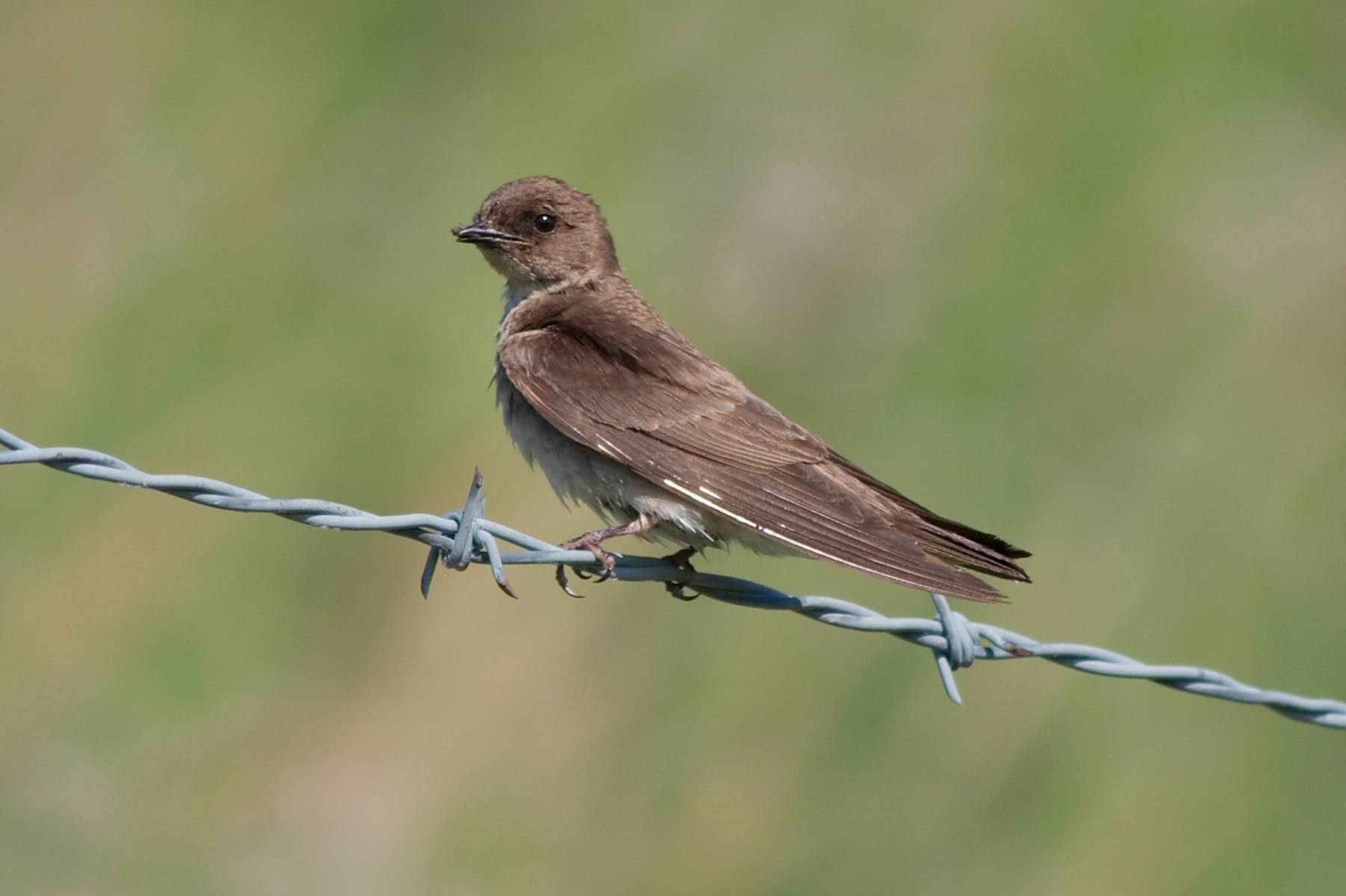
Photo Dori (opens in a new tab) / Wikimedia Commons, CC BY-SA 3.0 us (opens in a new tab)
At a glance
- Size
- About 12 to 15 cm long
- Weight
- About 10 to 18 g
- Habitat
- Rivers, streams, lakes and road cuts
- Diet
- Flying insects
- In Georgia
- A common summer resident statewide
- Voice
- A low, buzzy "brrrt"
- Rabies vector
- No
Identification
- Key marks
- Plain brown above; dusky throat; pale belly; no breast band
- Told apart from
- Bank swallow, which has a white throat and a clear breast band
- Where to look
- Over rivers and around bridges in summer
Behaviour
Rough-winged swallows nest in holes in banks, rock crevices, drainpipes and bridges. The outer wing feathers of males have tiny hooks that feel rough to the touch, giving the bird its name.
Why they matter
These swallows adapt to man-made sites such as bridges and culverts, and eat many flying insects over rivers and lakes.
Reproduction and lifecycle
Nest — A cup of grass in a burrow, crevice or pipe
Eggs — Usually four to eight
Incubation — About 12 to 16 days
Chicks — Fed by both parents
Flight — At about 18 to 21 days
Lifespan — Several years
Living around people
- Swallows nesting in drainpipes and bridges are harmless and leave after the season.
Misconceptions
- Dull birds are uninteresting. The hooks on the rough-wing's feathers are unique among North American swallows.
Related species
Seasonal activity
When this species is breeding, and when there are nests on the ground. Mowing during the shaded months is how most nests are found.
| Jan | Feb | Mar | Apr | May | Jun | Jul | Aug | Sep | Oct | Nov | Dec | |
|---|---|---|---|---|---|---|---|---|---|---|---|---|
| Breeding | Jan: no | Feb: no | Mar: no | Apr: no | May: no | Jun: no | Jul: no | Aug: no | Sep: no | Oct: no | Nov: no | Dec: no |
| Active nests | Jan: no | Feb: no | Mar: no | Apr: no | May: no | Jun: no | Jul: no | Aug: no | Sep: no | Oct: no | Nov: no | Dec: no |
| Notes | In Central America | In Central America | Arriving | Nesting | Nesting | Young fledging | Present | Migrants | Leaving | Last birds | In Central America | In Central America |
Where it lives
Recorded in 88 states and provinces. Each one links to the other animals there, and to the rehabilitators licensed for them.
United States
- Alabamabreeding
- Alaskabreeding
- Arizona
- Arkansasbreeding
- Californiabreeding
- Coloradobreeding
- Connecticutbreeding
- Delawarebreeding
- District of Columbiabreeding
- Florida
- Georgiabreeding
- Idahobreeding
- Illinoisbreeding
- Indianabreeding
- Iowabreeding
- Kansasbreeding
- Kentuckybreeding
- Louisianabreeding
- Mainebreeding
- Marylandbreeding
- Massachusettsbreeding
- Michiganbreeding
- Minnesotabreeding
- Mississippibreeding
- Missouribreeding
- Montanabreeding
- Nebraskabreeding
- Nevada
- New Hampshirebreeding
- New Jerseybreeding
- New Mexicobreeding
- New Yorkbreeding
- North Carolinabreeding
- North Dakotabreeding
- Ohiobreeding
- Oklahomabreeding
- Oregonbreeding
- Pennsylvaniabreeding
- Rhode Islandbreeding
- South Carolinabreeding
- South Dakotabreeding
- Tennesseebreeding
- Texasbreeding
- Utahbreeding
- Vermontbreeding
- Virginiabreeding
- Washingtonbreeding
- West Virginiabreeding
- Wisconsinbreeding
- Wyomingbreeding
Canada
Mexico
- Aguascalientesbreeding
- Baja Californiabreeding
- Baja California Sur
- Campechein winter
- Chiapas
- Chihuahua
- Coahuilabreeding
- Colima
- Durango
- Guanajuato
- Guerrero
- Hidalgoin winter
- Jalisco
- Mexico Citybreeding
- Michoacan
- Morelos
- Nayarit
- Nuevo Leon
- Oaxaca
- Puebla
- Queretaro
- Quintana Roo
- San Luis Potosi
- Sinaloa
- Sonora
- State of Mexico
- Tabascoin winter
- Tamaulipasin winter
- Tlaxcalabreeding
- Veracruz
- Yucatan
- Zacatecasbreeding
If you found one
Answer a few questions and you will get a specific answer for what you are looking at.
I found an animal