
Species
Long-tailed salamander
Eurycea longicauda
A slender orange salamander covered in black spots, with a tail marked in a herringbone pattern.
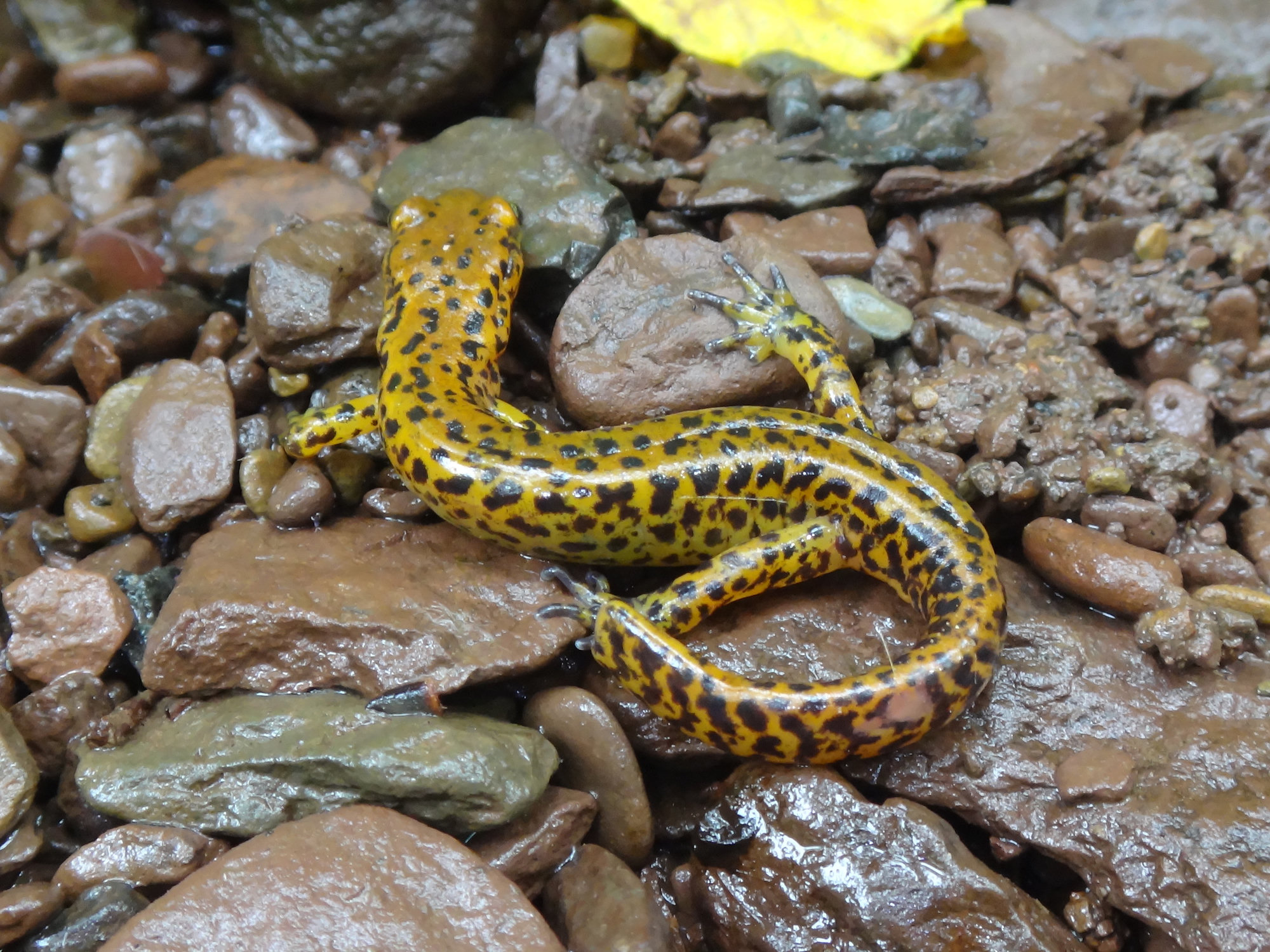
Photo Alie / C.A. Kratzer (opens in a new tab) / iNaturalist, CC BY-SA 4.0 (opens in a new tab)
At a glance
- Size
- Usually 10 to 16 cm long
- Habitat
- Streams, seeps, springs and cave entrances in limestone areas
- Diet
- Small invertebrates
- In Georgia
- Northwest Georgia
- Rabies vector
- No
Identification
- Key marks
- Yellow to orange with many black spots; black bars on the tail form a herringbone pattern
- Told apart from
- Cave salamander, which is redder with fewer, scattered spots
- Told apart from
- Three-lined salamander, which has stripes
- Where to look
- Under rocks near streams and cave mouths
Behaviour
It lives near water in limestone country and often goes into cave entrances.
Why they matter
It is part of the rich animal life of northwest Georgia's limestone valleys and caves.
Reproduction and lifecycle
Eggs — Laid in underground water or under rocks
Hatching — In one to two months
Larvae — Aquatic for several months
Maturity — At about two years
Lifespan — Several years
Breathing — Through the skin; no lungs
Living around people
- Keep cave entrances and springs clean and undisturbed.
Misconceptions
- Bright orange means poisonous to touch. It is harmless, though it is best not handled.
Related species
Seasonal activity
When this species is breeding, and when there are nests on the ground. Mowing during the shaded months is how most nests are found.
| Jan | Feb | Mar | Apr | May | Jun | Jul | Aug | Sep | Oct | Nov | Dec | |
|---|---|---|---|---|---|---|---|---|---|---|---|---|
| Breeding | Jan: no | Feb: no | Mar: no | Apr: no | May: no | Jun: no | Jul: no | Aug: no | Sep: no | Oct: no | Nov: no | Dec: no |
| Active nests | Jan: no | Feb: no | Mar: no | Apr: no | May: no | Jun: no | Jul: no | Aug: no | Sep: no | Oct: no | Nov: no | Dec: no |
| Notes | Laying eggs underground | Eggs | Larvae hatching | Active | Active | Active on wet nights | Active on wet nights | Active on wet nights | Active | Active | Active | Moving to breeding sites |
Where it lives
Recorded in 15 states and provinces. Each one links to the other animals there, and to the rehabilitators licensed for them.
If you found one
Answer a few questions and you will get a specific answer for what you are looking at.
I found an animal