
Species
Greenhouse frog
Eleutherodactylus planirostris
A tiny Caribbean frog that skips the tadpole stage and has spread to south Georgia's gardens.
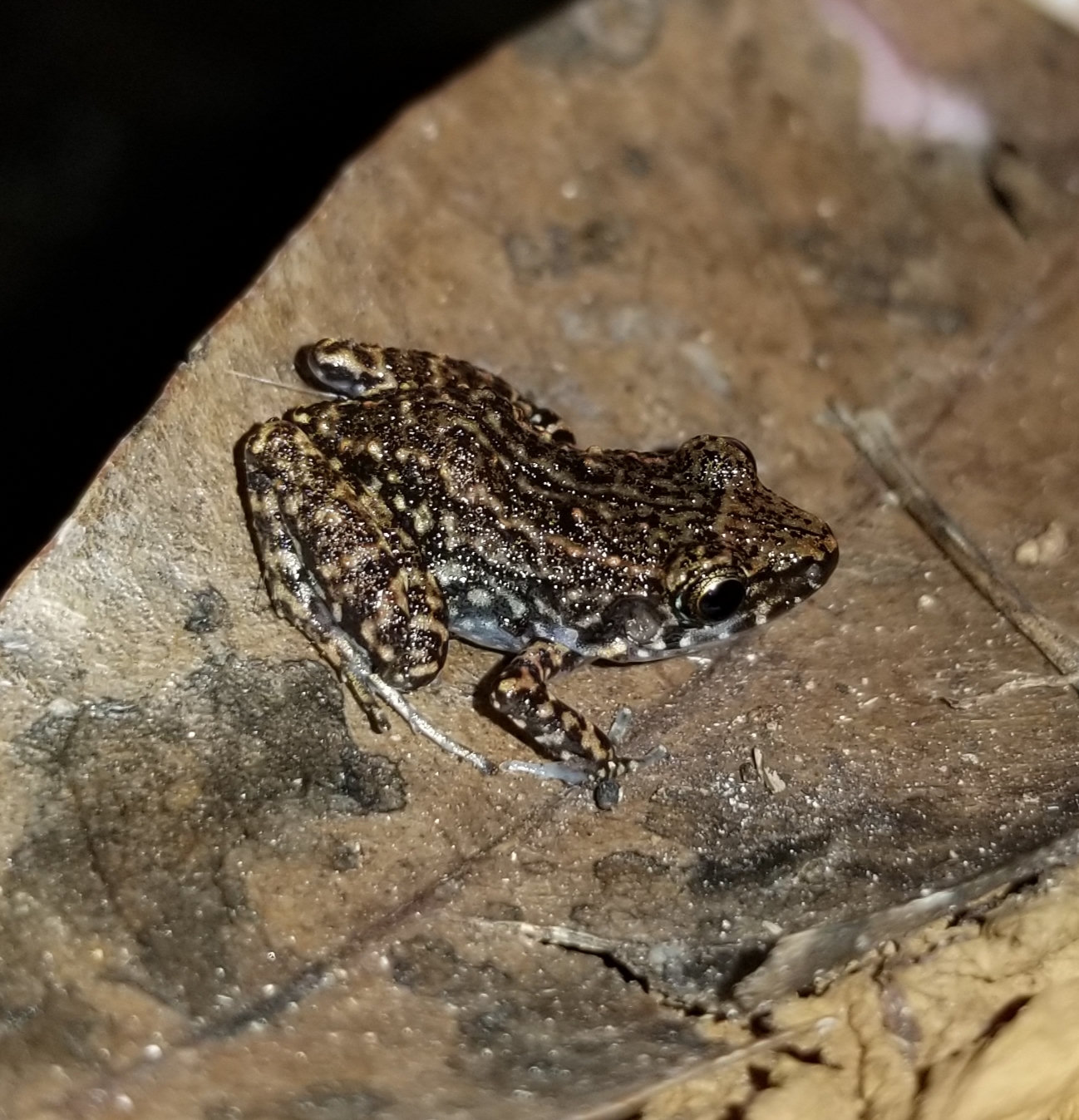
Photo Rachel Crane (opens in a new tab) / iNaturalist, CC BY 4.0 (opens in a new tab)
At a glance
- Size
- About 1.5 to 3 cm long
- Habitat
- Gardens, greenhouses, leaf litter and flower beds
- Diet
- Ants, mites and other tiny invertebrates
- In Georgia
- Gardens in south and coastal Georgia; introduced
- Voice
- Soft, bird-like chirps
- Rabies vector
- No
Identification
- Key marks
- Tiny; brown with reddish tones, often striped or mottled; red eyes
- Told apart from
- Little grass frog, which lives in wetlands and has a stripe through the eye
- Where to look
- Under pots, mulch and leaf litter in gardens
Behaviour
Greenhouse frogs lay eggs on land, and tiny froglets hatch directly from them with no tadpole stage, so they need no water to breed. They spread with potted plants.
Why they matter
They arrived from the Caribbean in plant shipments and now live in gardens across the Gulf coast states. Their effect on native wildlife seems small.
Reproduction and lifecycle
Eggs — A few eggs laid on land in moist soil
Hatching — Froglets hatch directly in about two weeks
Tadpoles — None
Maturity — Within a year
Lifespan — A few years
Calling — On warm nights
Living around people
- It is harmless; checking potted plants slows its spread.
Misconceptions
- All frogs have tadpoles. Greenhouse frogs hatch as tiny froglets.
Related species
Seasonal activity
When this species is breeding, and when there are nests on the ground. Mowing during the shaded months is how most nests are found.
| Jan | Feb | Mar | Apr | May | Jun | Jul | Aug | Sep | Oct | Nov | Dec | |
|---|---|---|---|---|---|---|---|---|---|---|---|---|
| Breeding | Jan: no | Feb: no | Mar: no | Apr: no | May: no | Jun: no | Jul: no | Aug: no | Sep: no | Oct: no | Nov: no | Dec: no |
| Active nests | Jan: no | Feb: no | Mar: no | Apr: no | May: no | Jun: no | Jul: no | Aug: no | Sep: no | Oct: no | Nov: no | Dec: no |
| Notes | Sheltering | Sheltering | Active on warm nights | Active | Breeding | Breeding | Breeding | Breeding | Active | Active | Sheltering | Sheltering |
Where it lives
Recorded in 11 states and provinces. Each one links to the other animals there, and to the rehabilitators licensed for them.
United States
If you found one
Answer a few questions and you will get a specific answer for what you are looking at.
I found an animal