
Species
Greater scaup
Aythya marila
A diving duck of open bays and big lakes, very like the lesser scaup but rounder-headed and more coastal.
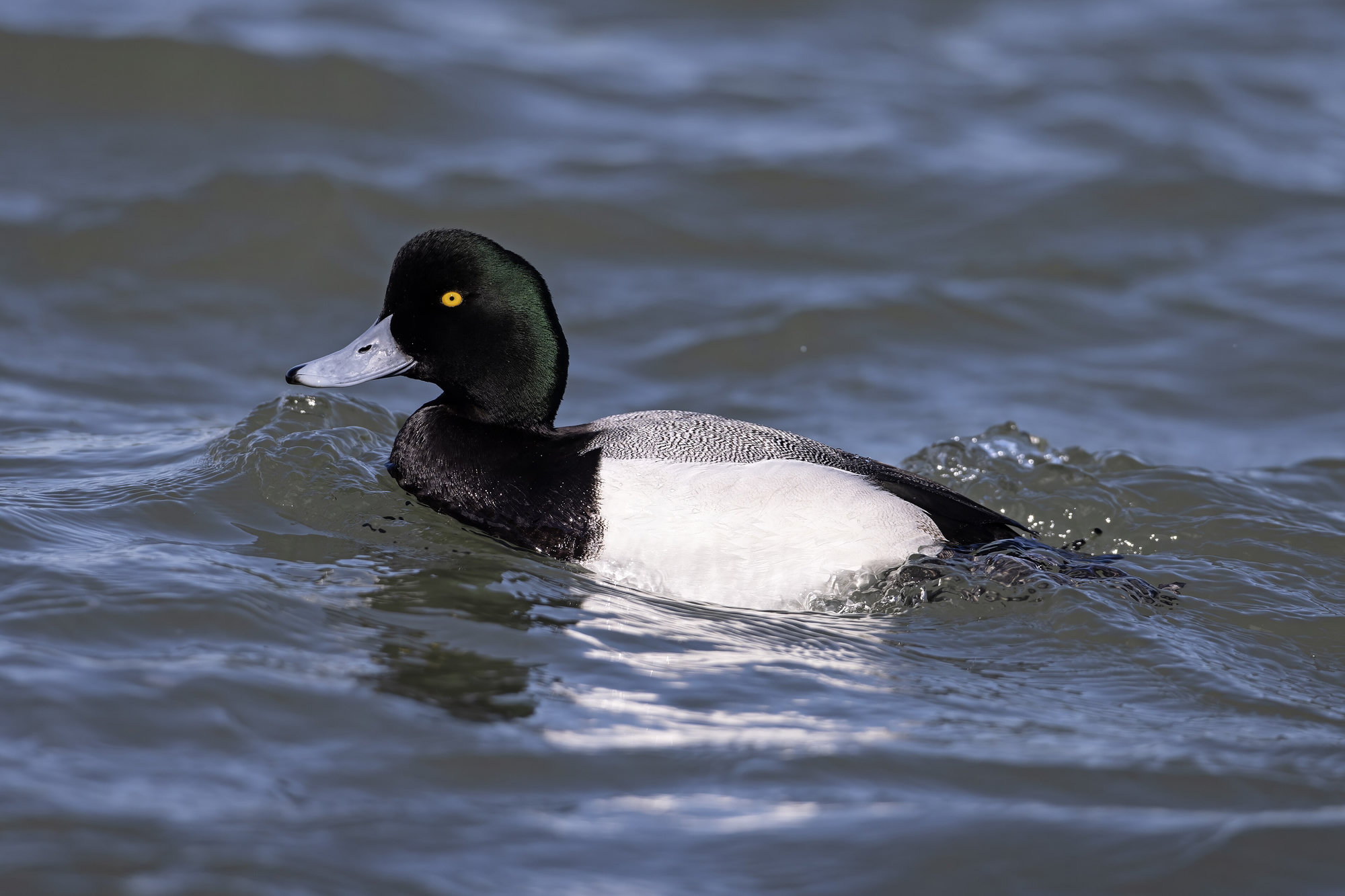
Photo Chuck Homler d/b/a Focus On Wildlife (opens in a new tab) / Wikimedia Commons, CC BY-SA 4.0 (opens in a new tab)
At a glance
- Size
- About 39 to 56 cm long
- Weight
- About 700 to 1,400 g
- Habitat
- Coastal bays, sounds and large reservoirs in winter
- Diet
- Clams, mussels, snails and aquatic plants
- In Georgia
- An uncommon winter visitor, mostly on the coast
- Voice
- Mostly quiet; a low "scaup" from females
- Rabies vector
- No
Identification
- Male
- Rounded head with a green gloss; black breast; pale grey back; white sides; blue bill with a broad black tip
- Female
- Brown with a broad white patch at the base of the bill
- In flight
- A long white stripe that runs well into the outer wing
- Told apart from
- Lesser scaup, which has a peaked head, a purple gloss and a shorter white wing stripe
- Told apart from
- Ring-necked duck, which has a black back and a white-ringed bill
- Where to look
- Rafts on coastal sounds and large lakes, November to March
Behaviour
Greater scaup dive for shellfish and plants, often gathering in large rafts on open water. They feed day and night, swallowing small clams and mussels whole and crushing them in the gizzard.
Why they matter
Greater scaup breed around the whole northern hemisphere and winter mostly on salt water. By feeding on shellfish they depend on clean coastal waters, and they are among the ducks most affected by contaminants that build up in the animals they eat.
Reproduction and lifecycle
Nest — A down-lined bowl on the ground near water, often on islands
Eggs — Usually 7 to 9
Incubation — About 24 to 28 days
Ducklings — Leave the nest within a day
Flight — At about five to six weeks
Lifespan — Wild birds over twenty years are recorded
Living around people
- Scaup rafts on coastal waters are sensitive to oil and to disturbance from boats.
Misconceptions
- Greater and lesser scaup can be told apart by size alone. They overlap; head shape and the wing stripe are better clues.
Related species
Seasonal activity
When this species is breeding, and when there are nests on the ground. Mowing during the shaded months is how most nests are found.
| Jan | Feb | Mar | Apr | May | Jun | Jul | Aug | Sep | Oct | Nov | Dec | |
|---|---|---|---|---|---|---|---|---|---|---|---|---|
| Breeding | Jan: no | Feb: no | Mar: no | Apr: no | May: no | Jun: no | Jul: no | Aug: no | Sep: no | Oct: no | Nov: no | Dec: no |
| Active nests | Jan: no | Feb: no | Mar: no | Apr: no | May: no | Jun: no | Jul: no | Aug: no | Sep: no | Oct: no | Nov: no | Dec: no |
| Notes | Wintering on the coast | Wintering | Migrating north | Moving to northern breeding grounds | Nesting on tundra lakes | Nesting | Ducklings hatching | Young growing | Young flying | Migration begins | Arriving on the Atlantic coast | Wintering |
Where it lives
Recorded in 59 states and provinces. Each one links to the other animals there, and to the rehabilitators licensed for them.
United States
- Alabamain winter
- Alaska
- Arkansasin winter
- Californiain winter
- Coloradoin winter
- Connecticutin winter
- Delawarein winter
- District of Columbiain winter
- Floridain winter
- Georgiain winter
- Idahoin winter
- Illinoisin winter
- Indianain winter
- Iowain winter
- Kansasin winter
- Kentuckyin winter
- Mainein winter
- Marylandin winter
- Massachusettsin winter
- Michiganin winter
- Minnesotain winter
- Mississippiin winter
- Missouriin winter
- Montanain winter
- Nebraskain winter
- Nevadain winter
- New Hampshirein winter
- New Jerseyin winter
- New Yorkin winter
- North Carolinain winter
- North Dakotain winter
- Ohioin winter
- Oklahomain winter
- Oregonin winter
- Pennsylvaniain winter
- Rhode Islandin winter
- South Dakotain winter
- Tennesseein winter
- Texasin winter
- Utahin winter
- Vermontin winter
- Virginiain winter
- Washingtonin winter
- West Virginiain winter
- Wisconsinin winter
- Wyomingin winter
If you found one
Answer a few questions and you will get a specific answer for what you are looking at.
I found an animal