
Species
Grasshopper sparrow
Ammodramus savannarum
A small, flat-headed sparrow of grasslands whose song sounds like a grasshopper's buzz.
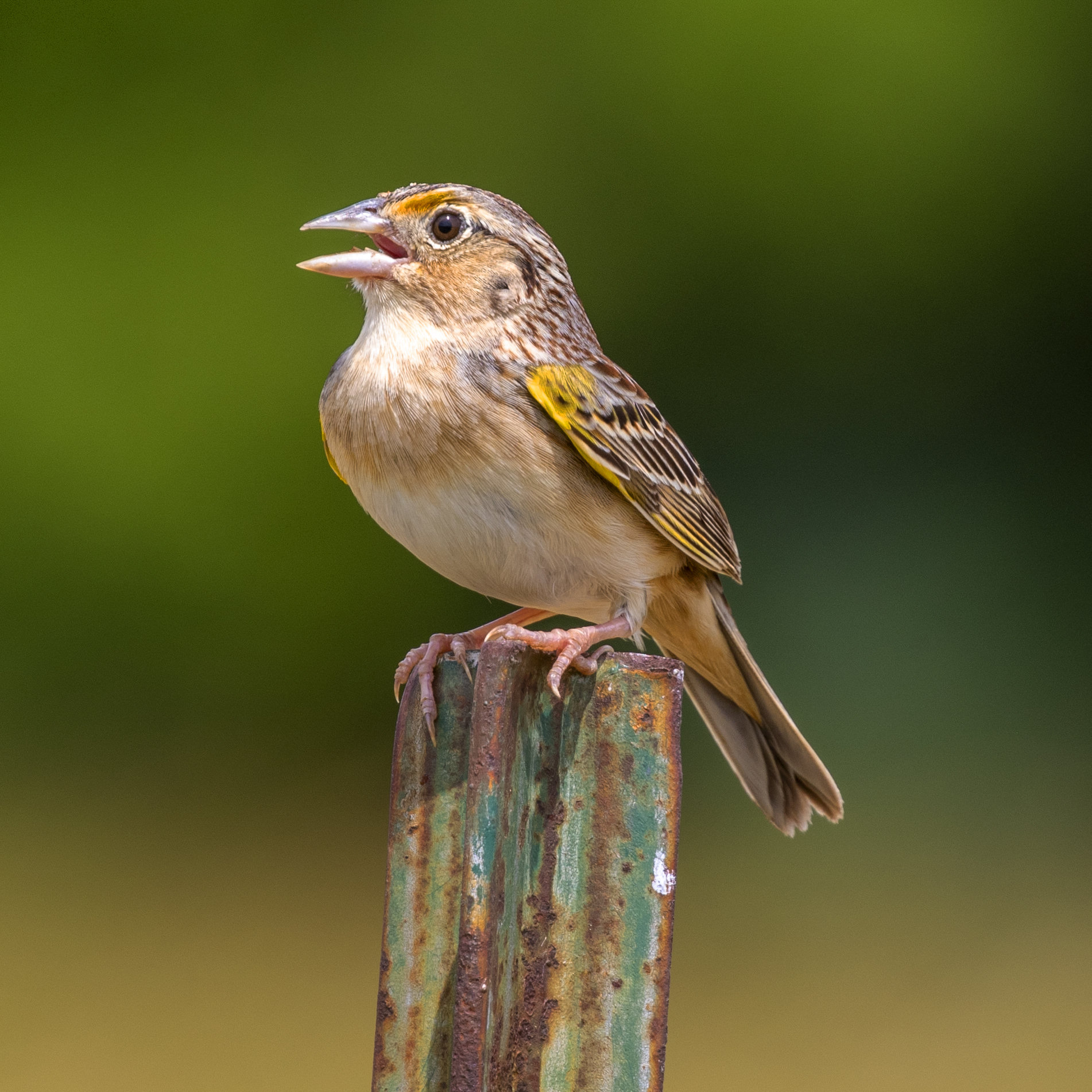
Photo Dan Vickers (opens in a new tab) / iNaturalist, CC BY 4.0 (opens in a new tab)
At a glance
- Size
- About 11 to 13 cm long
- Weight
- About 14 to 20 g
- Habitat
- Grasslands, pastures and hayfields
- Diet
- Insects, especially grasshoppers, and seeds
- In Georgia
- An uncommon summer resident in the north; a winter visitor in the south
- Voice
- A thin, insect-like buzz "tik-tik-zzzzz"
- Rabies vector
- No
Identification
- Key marks
- Flat head; short tail; buffy breast with no streaks; yellow spot in front of the eye
- Told apart from
- Savannah sparrow, which is streaked below
- Told apart from
- Henslow's sparrow, which has an olive head and a streaked breast
- Where to look
- Grassy pastures and hayfields
Behaviour
Grasshopper sparrows run through grass like mice and sing from fence wires or tall stems.
Why they matter
Grasshopper sparrows have declined across North America as grasslands were ploughed or overgrown. They depend on pastures and hayfields managed to keep grass short and varied.
Reproduction and lifecycle
Nest — A domed cup on the ground in grass
Eggs — Usually four or five
Incubation — About 11 to 12 days
Chicks — Fed by both parents
Flight — At about 9 days
Lifespan — A few years
Living around people
- Delaying hay cutting until after July protects their nests.
Misconceptions
- The buzzing in the grass is an insect. It may be this sparrow.
Related species
Seasonal activity
When this species is breeding, and when there are nests on the ground. Mowing during the shaded months is how most nests are found.
| Jan | Feb | Mar | Apr | May | Jun | Jul | Aug | Sep | Oct | Nov | Dec | |
|---|---|---|---|---|---|---|---|---|---|---|---|---|
| Breeding | Jan: no | Feb: no | Mar: no | Apr: no | May: no | Jun: no | Jul: no | Aug: no | Sep: no | Oct: no | Nov: no | Dec: no |
| Active nests | Jan: no | Feb: no | Mar: no | Apr: no | May: no | Jun: no | Jul: no | Aug: no | Sep: no | Oct: no | Nov: no | Dec: no |
| Notes | Wintering in the south | Wintering | Arriving in the north | Nesting | Nesting | Second broods | Young fledging | Present | Migrating | Arriving in the south | Wintering | Wintering |
Where it lives
Recorded in 75 states and provinces. Each one links to the other animals there, and to the rehabilitators licensed for them.
United States
- Alabamabreeding
- Arizona
- Arkansasbreeding
- Californiabreeding
- Coloradobreeding
- Connecticutbreeding
- Delawarebreeding
- District of Columbiabreeding
- Floridain winter
- Georgiabreeding
- Idahobreeding
- Illinoisbreeding
- Indianabreeding
- Iowabreeding
- Kansasbreeding
- Kentuckybreeding
- Mainebreeding
- Marylandbreeding
- Massachusettsbreeding
- Michiganbreeding
- Minnesotabreeding
- Missouribreeding
- Montanabreeding
- Nebraskabreeding
- New Hampshirebreeding
- New Jerseybreeding
- New Mexico
- New Yorkbreeding
- North Carolinabreeding
- North Dakotabreeding
- Ohiobreeding
- Oklahomabreeding
- Oregonbreeding
- Pennsylvaniabreeding
- Rhode Islandbreeding
- South Carolinabreeding
- South Dakotabreeding
- Tennesseebreeding
- Texas
- Utahbreeding
- Vermontbreeding
- Virginiabreeding
- Washingtonbreeding
- West Virginiabreeding
- Wisconsinbreeding
- Wyomingbreeding
Canada
Mexico
- Aguascalientesin winter
- Baja Californiapassing through
- Chihuahuain winter
- Coahuilain winter
- Colimain winter
- Durangoin winter
- Guanajuatoin winter
- Guerreroin winter
- Jaliscoin winter
- Michoacanin winter
- Morelosin winter
- Nayaritin winter
- Nuevo Leonin winter
- Oaxacain winter
- Pueblapassing through
- Queretaroin winter
- San Luis Potosipassing through
- Sinaloain winter
- Sonorain winter
- State of Mexicoin winter
- Tamaulipasin winter
- Veracruzin winter
- Yucatanin winter
If you found one
Answer a few questions and you will get a specific answer for what you are looking at.
I found an animal