
Species
Golden eagle
Aquila chrysaetos
A huge, dark eagle that winters in small numbers in the north Georgia mountains.
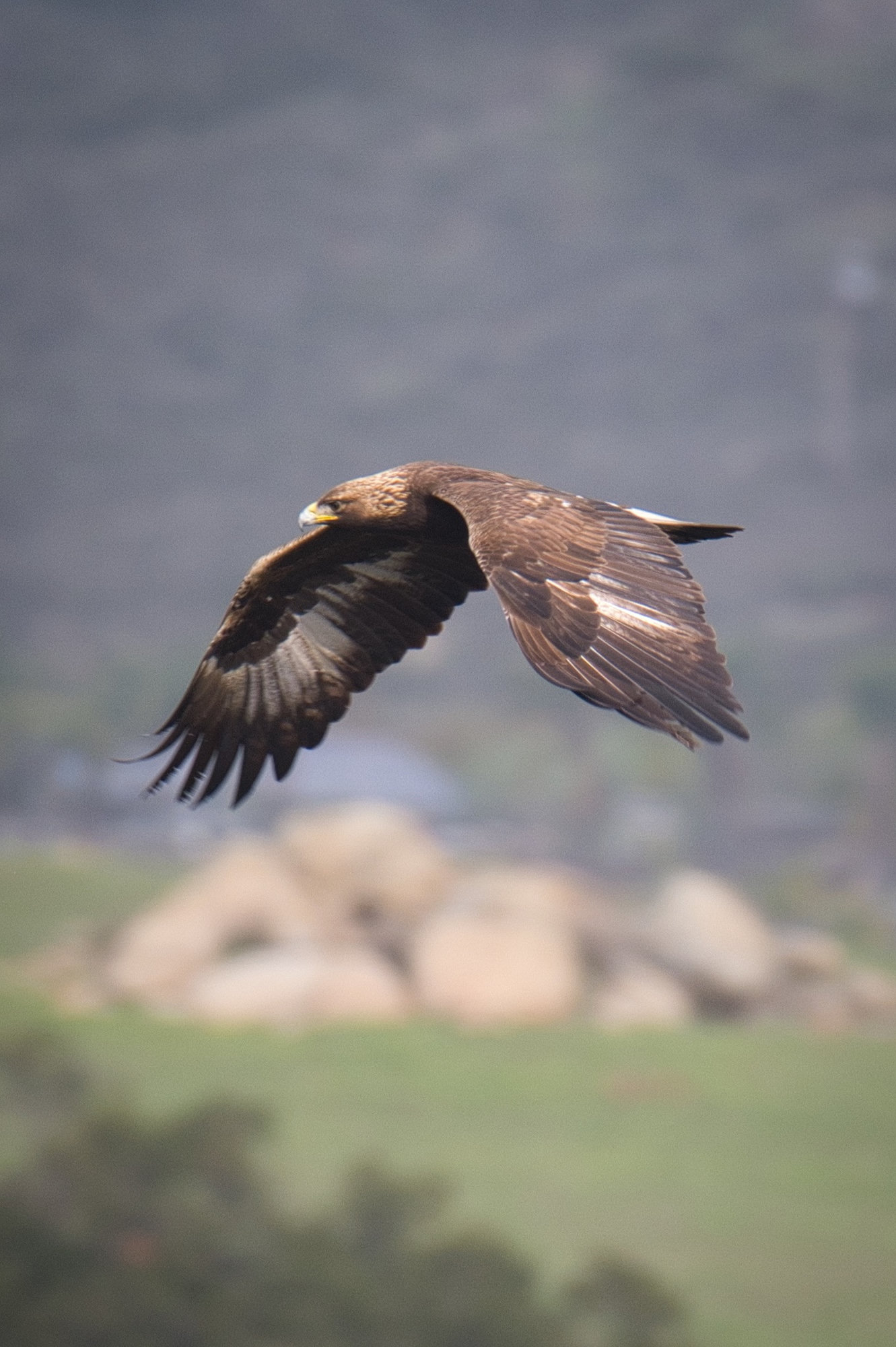
Photo Madeleine Claire (opens in a new tab) / iNaturalist, CC BY 4.0 (opens in a new tab)
At a glance
- Size
- About 70 to 84 cm long; wingspan about 1.9 to 2.3 m
- Weight
- About 3 to 6 kg
- Habitat
- Mountain forests and open ridges in winter
- Diet
- Rabbits, squirrels, groundhogs, deer carrion and birds
- In Georgia
- A rare but regular winter visitor in the mountains
- Voice
- Mostly silent
- Rabies vector
- No
Identification
- Key marks
- Very large; dark brown with a golden sheen on the back of the head and neck; young birds with white patches in the wings and at the base of the tail
- Told apart from
- Young bald eagle, which has a larger head and bill and blotchy white underneath
- Told apart from
- Turkey vulture, which has a small red head
- Where to look
- Rarely seen; over mountain ridges in winter
Behaviour
Golden eagles in the East breed in northern Canada and winter in the Appalachians, often in remote forests. Camera traps set at deer carcasses have shown they are more widespread in winter than once thought.
Why they matter
The small eastern population of golden eagles was little known until recent tracking and camera studies. They are top predators of mountain forests and a sign of large, wild landscapes.
Reproduction and lifecycle
Nest — A huge platform of sticks on cliffs, in the far north for eastern birds
Eggs — Usually two
Incubation — About 41 to 45 days
Chicks — Fed by both parents
Flight — At about ten to eleven weeks
Lifespan — Wild birds over thirty years are recorded
Living around people
- Lead fragments in deer carcasses poison golden eagles that feed on them in winter.
Misconceptions
- Golden eagles live only in the West. A small population winters in the eastern mountains, including Georgia.
Related species
Seasonal activity
When this species is breeding, and when there are nests on the ground. Mowing during the shaded months is how most nests are found.
| Jan | Feb | Mar | Apr | May | Jun | Jul | Aug | Sep | Oct | Nov | Dec | |
|---|---|---|---|---|---|---|---|---|---|---|---|---|
| Breeding | Jan: no | Feb: no | Mar: no | Apr: no | May: no | Jun: no | Jul: no | Aug: no | Sep: no | Oct: no | Nov: no | Dec: no |
| Active nests | Jan: no | Feb: no | Mar: no | Apr: no | May: no | Jun: no | Jul: no | Aug: no | Sep: no | Oct: no | Nov: no | Dec: no |
| Notes | Wintering in the mountains | Wintering | Leaving | Migrating north | Nesting in Canada | Nesting | Chicks | Young flying | Migration begins | Moving south | Arriving | Wintering |
Where it lives
Recorded in 42 states and provinces. Each one links to the other animals there, and to the rehabilitators licensed for them.
United States
Canada
If you found one
Answer a few questions and you will get a specific answer for what you are looking at.
I found an animal