
Species
Dark-eyed junco
Junco hyemalis
A slate-grey sparrow with a white belly and flashing white tail feathers, a winter visitor and mountain nester in Georgia.
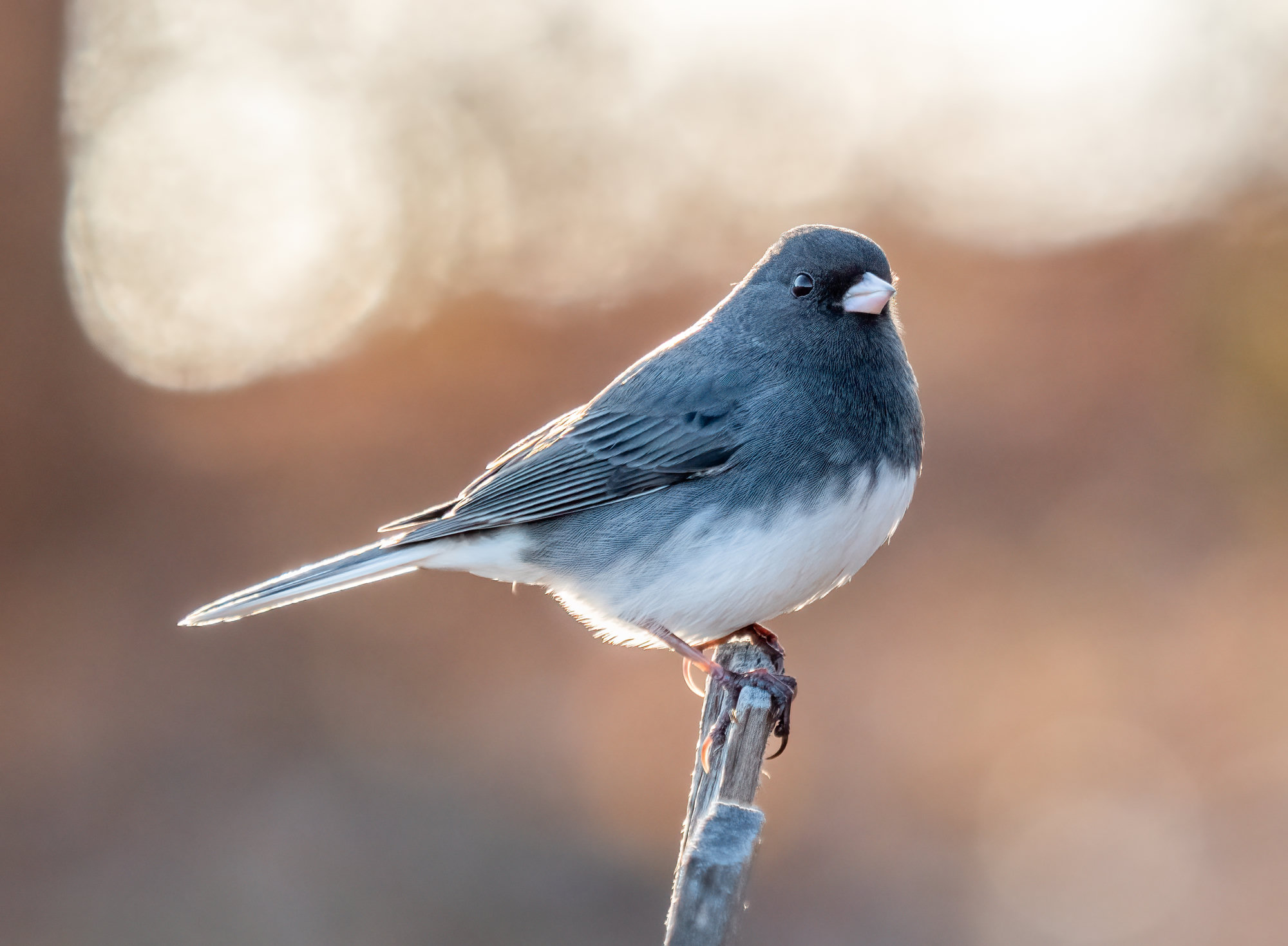
Photo Rhododendrites (opens in a new tab) / Wikimedia Commons, CC BY-SA 4.0 (opens in a new tab)
At a glance
- Size
- About 14 to 16 cm long
- Weight
- About 18 to 30 g
- Habitat
- Woodland edges, fields and yards in winter; high mountain forests in summer
- Diet
- Seeds and insects
- In Georgia
- A common winter visitor; nests in the high mountains
- Voice
- A musical trill; "tack" calls
- Rabies vector
- No
Identification
- Key marks
- Slate-grey above; white belly; pink bill; white outer tail feathers flashed in flight
- Told apart from
- Eastern towhee, which is larger with rusty sides
- Where to look
- On the ground under feeders and along woodland edges in winter
Behaviour
Juncos feed on the ground in flocks, flashing white tail feathers as they fly.
Why they matter
Dark-eyed juncos are one of the most abundant birds in North America. Their arrival in Georgia each autumn, which earned them the name "snowbird", marks the start of winter.
Reproduction and lifecycle
Nest — A cup on the ground, often under a bank or roots
Eggs — Usually three to five
Incubation — About 11 to 13 days
Chicks — Fed by both parents
Flight — At about 9 to 13 days
Lifespan — A few years
Living around people
- Juncos feed under feeders and in leaf litter.
Misconceptions
- Juncos bring snow. Their arrival coincides with cold weather, not snow itself.
Related species
Seasonal activity
When this species is breeding, and when there are nests on the ground. Mowing during the shaded months is how most nests are found.
| Jan | Feb | Mar | Apr | May | Jun | Jul | Aug | Sep | Oct | Nov | Dec | |
|---|---|---|---|---|---|---|---|---|---|---|---|---|
| Breeding | Jan: no | Feb: no | Mar: no | Apr: no | May: no | Jun: no | Jul: no | Aug: no | Sep: no | Oct: no | Nov: no | Dec: no |
| Active nests | Jan: no | Feb: no | Mar: no | Apr: no | May: no | Jun: no | Jul: no | Aug: no | Sep: no | Oct: no | Nov: no | Dec: no |
| Notes | Winter flocks | Flocks | Leaving the lowlands | Nesting in the mountains and north | Nesting | Chicks | Second broods | Present in the mountains | Present | Arriving in the lowlands | Flocks | Flocks |
Where it lives
Recorded in 64 states and provinces. Each one links to the other animals there, and to the rehabilitators licensed for them.
United States
- Alabamain winter
- Alaska
- Arizona
- Arkansasin winter
- California
- Colorado
- Connecticutin winter
- Delawarein winter
- District of Columbiain winter
- Georgia
- Idahoin winter
- Illinoisin winter
- Indianain winter
- Iowain winter
- Kansasin winter
- Kentuckyin winter
- Louisianain winter
- Maine
- Marylandin winter
- Massachusettsin winter
- Michiganin winter
- Minnesotain winter
- Mississippiin winter
- Missouriin winter
- Montana
- Nebraskain winter
- Nevada
- New Hampshirein winter
- New Jerseyin winter
- New Mexicoin winter
- New Yorkin winter
- North Carolinain winter
- North Dakotain winter
- Ohioin winter
- Oklahomain winter
- Oregon
- Pennsylvaniain winter
- Rhode Islandin winter
- South Carolinain winter
- South Dakota
- Tennesseein winter
- Texasin winter
- Utahin winter
- Vermontin winter
- Virginiain winter
- Washington
- West Virginiain winter
- Wisconsinin winter
- Wyoming
Canada
If you found one
Answer a few questions and you will get a specific answer for what you are looking at.
I found an animal